

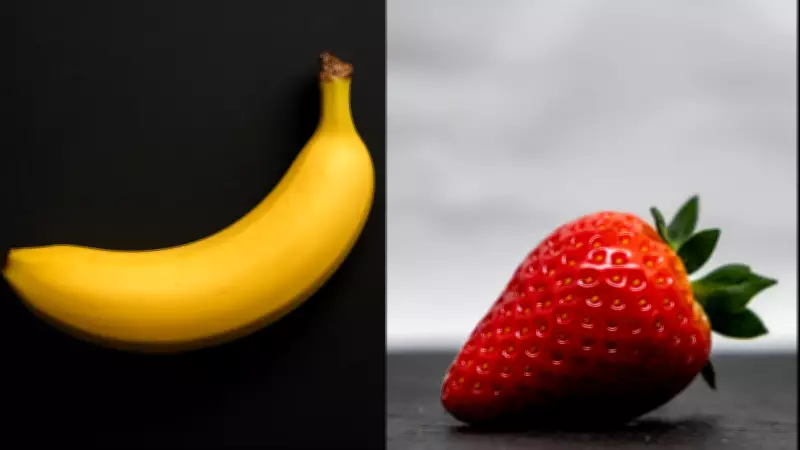
The Botanical Puzzle: Bananas vs. Strawberries
Have you ever wondered why bananas are considered berries from a botanical perspective, while strawberries are not? This seemingly quirky question has a solid scientific foundation. In everyday language, fruits are often categorized by their taste and appearance, but botanists classify them based on how they develop from flowers. This discrepancy between common and scientific terminology leads to some fascinating and unexpected outcomes. Understanding this not only resolves the mystery but also highlights the intriguing world of plant biology. Let's delve into what sets bananas apart from strawberries.
What Defines a Berry in Botany?
In botany, a berry is defined as a type of fruit that originates from a single ovary of a plant flower and typically contains multiple seeds embedded within a fleshy pulp. According to the University of California, Agriculture and Natural Resources, "berries are fruits that are produced from a single ovary, usually with several seeds embedded in the flesh." This definition includes fruits like bananas, grapes, and tomatoes, all of which qualify as true berries. Bananas fit this classification because they develop from a single flower and its ovary, featuring soft, fleshy pulp with seeds. Botanically, a berry is characterized as a fleshy fruit with numerous seeds, such as grapes, tomatoes, and bananas.
Why Bananas Are True Berries
The banana fruit perfectly aligns with the biological criteria for a berry. It grows from a single ovary and consists of three main parts: the peel, the soft pulp, and the inner section that houses seeds. As noted by Krishi Jagran, even though modern cultivated banana varieties often lack seeds due to artificial breeding techniques, their botanical structure still classifies them as berries. Botanical research confirms that commercially grown bananas are "parthenocarpic," meaning they develop without fertilization, yet this does not alter their berry status. In simple terms, a true berry requires: one flower, one ovary, and soft flesh inside.

Why Strawberries Are Not Botanically Berries
Strawberries, despite their common name, do not meet the botanical standards for berries. They are categorized as "aggregate fruits," which form from a flower with multiple ovaries. Each tiny "seed" visible on the exterior of a strawberry is actually an individual fruit called an achene. The University of California study clarifies, "A strawberry is not a berry but an aggregate fruit... each 'seed' on the outside is actually a separate fruit." Unlike true berries, strawberries do not develop from a single ovary, making them distinct in structure and classification.
Key Differences Explained Simply
The core distinction lies in the reproductive mechanisms of the plants. For bananas, one ovary results in a berry, while for strawberries, several ovaries lead to an aggregate fruit. Although this scientific logic might seem counterintuitive compared to taste and appearance, it accurately reflects the plants' reproductive processes. Ultimately, the debate between bananas and strawberries showcases how science often challenges conventional wisdom, offering a deeper understanding of nature's complexities. So, next time you enjoy a banana, remember—it's a genuine berry!






