

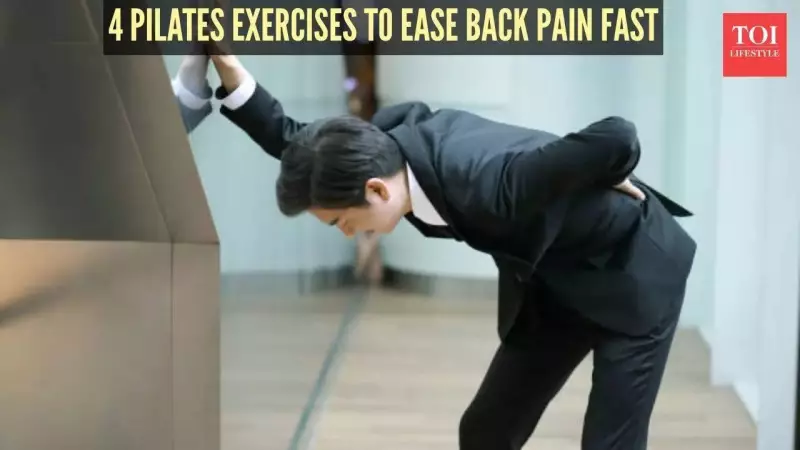
That nagging back pain that creeps in after a long day at work, carrying heavy groceries, or even just sleeping in an awkward position can feel like an unwelcome guest that never leaves. Unlike temporary discomfort, this needling pain often persists, resisting quick fixes and demanding proper attention. While countless advertisements promise instant relief through balms and gadgets, a genuine solution might lie in simple, targeted exercises.
Expert-Backed Pilates Moves for Spinal Relief
In a viral Instagram video, a certified Pilates instructor has demonstrated four straightforward moves designed to lengthen the spine and create a feeling akin to an internal massage. These exercises, which can be easily performed at home on a mat, promise to gradually but effectively heal an aching back. The video, captioned "Unlock your spine with these four moves," has garnered significant attention for its practical approach to a common problem.
The Four Key Exercises to Practice
1. Standing Roll Down

Begin by standing upright on your mat with your arms raised overhead. From this position, slowly bend forward at the waist, aiming to touch your toes with your fingers. Hold this stretch for approximately two seconds before gracefully returning to the starting position. The instructor, Shaw, recommends performing six to eight repetitions of this movement. The effectiveness of this exercise is supported by experience; in a 2025 feature for Marie Claire, Rebecca Shepherd practiced the Pilates roll down daily for a week and noted a significant improvement in her spinal mobility. Abby McLachlan, a Pilates instructor and founder of East of Eden, confirmed to the publication that "It's a really good exercise for spinal flexion and mobility."
2. Spine Stretch Forward
Sit on the mat with your legs extended forward and separated at hip-width. Raise your arms straight in front of you, ensuring your back is perfectly straight. Now, initiate a slow, controlled forward bend from your hips, making little pushing motions to gently stretch the spine. Aim for six to ten repetitions of this move. A 2023 study published in the Journal of Physiotherapy provides scientific backing, having found stretching exercises to be particularly effective for individuals suffering from chronic non-specific low back pain.
3. One Leg Circle
Lie flat on your back on the mat with your legs straight. Lift your right leg into the air until it is straight, and then begin tracing circles in the air with your foot. Complete one circle in a clockwise direction, followed by one in an anti-clockwise direction. Strive for six to eight reps for each leg in each direction. Explaining the benefits, Pilates instructor Aleksandra Warburton told Marie Claire that "Pilates leg circles are a classic mat exercise designed primarily to strengthen the core, stabilise the pelvis and strengthen the hips."
4. Rolling Like a Ball
Sit on the mat with your knees bent and apart, and your feet flat on the floor and placed together. Reach your hands to hold just above your ankle joints. While holding your legs, gently roll backwards onto your back, keeping it rounded, and then use your momentum to roll back up to a sitting position with a straight back. Try to complete six to ten reps of this exercise. The efficacy of this and similar moves is demonstrated in a 2016 study published in the Journal of Exercise Rehabilitation. This study analysed the effects of an eight-week Pilates program on postmenopausal women and found that exercises, including 'rolling like a ball,' significantly increased both muscle strength and flexibility. The JER study also included the spine stretch forward and leg circles, further validating this set of exercises.
Why You Should Add These Moves to Your Routine
These four exercises, recommended by a Pilates professional and supported by scientific research, form a cohesive routine aimed at enhancing back and spine strength. Incorporating them into your regular fitness regimen can offer substantial benefits for your overall physical health, providing a natural and proactive way to combat persistent back discomfort.

Note: The information provided in this article is for educational purposes only and is not intended as medical advice. Always consult with a qualified healthcare professional before starting any new exercise regimen or treatment, especially for pre-existing health conditions.





