Uttar Pradesh Launches Major Public Health Drive to Eradicate Lymphatic Filariasis
Lucknow: In a significant public health initiative, a mass drug administration (MDA) campaign aimed at eliminating lymphatic filariasis was officially launched across 21 districts and 64 blocks in Uttar Pradesh on Tuesday. The program was virtually inaugurated by Union Health Minister JP Nadda, who emphasized the critical nature of this effort to combat a debilitating disease.
High-Level Leadership and Strategic Vision
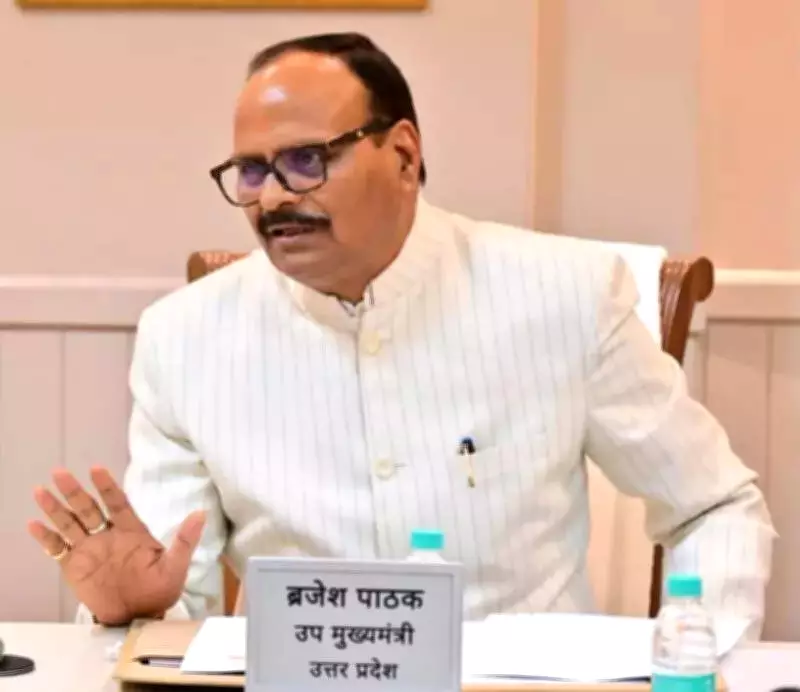
The virtual inauguration ceremony saw the participation of key officials including Deputy Chief Minister Brajesh Pathak, State Health Minister Mayenkeshwar Sharan Singh, Additional Chief Secretary (Health) Amit Ghosh, National Health Mission Mission Director Pinky Jovel, and district magistrates from all participating districts. This demonstrates the coordinated approach being taken at both state and national levels.
Union Minister JP Nadda highlighted that lymphatic filariasis remains a major public health challenge in India, warning that the disease causes long-term disability and imposes significant social and economic costs on affected families. He stressed that elimination would only be possible if every eligible person consumes the prescribed medicines, calling for the campaign to transform into a genuine "people's movement."

Comprehensive Implementation Strategy
The minister revealed that the MDA program is being implemented across 124 districts in 12 states nationwide, with Uttar Pradesh being a crucial participant. He directed authorities to establish drug intake booths at both government and private health facilities to ensure maximum accessibility for the population.
Speaking from Vidhan Bhavan in Lucknow, Deputy Chief Minister Brajesh Pathak affirmed the state government's commitment to making Uttar Pradesh filaria-free. He announced that the campaign will run from February 10 to February 28, with ASHA workers, frontline health staff, and volunteers conducting extensive door-to-door outreach to ensure comprehensive coverage.
Ambitious Targets and Critical Thresholds
Pathak disclosed that approximately 1.40 crore people are targeted to receive anti-filarial medicines under the direct observation of health workers. He emphasized that transmission can only be interrupted if more than 90% of the eligible population consumes the drugs, making community participation absolutely essential to success.
The campaign's central message is "Our resolve – freedom from filariasis," reflecting the determination to eliminate this public health burden. Pathak explained that filariasis is mosquito-borne, with symptoms often appearing 10 to 15 years after infection, leaving many people as asymptomatic carriers who unknowingly continue transmission.
Medication Protocol and Safety Measures
Under the campaign, eligible individuals above one year of age will receive WHO-recommended medicines—ivermectin, diethylcarbamazine (DEC), and albendazole—administered according to age-appropriate protocols. Pregnant women, children below one year, and critically ill individuals are excluded from the medication drive.
Officials have assured that the medicines are safe, with only rare mild and temporary side effects such as nausea or fatigue reported. Rapid Response Teams will be deployed across implementation areas to handle any medical emergencies that might arise during the campaign.
Five-Pillar Strategy and Multi-Departmental Coordination
State Filaria Officer Dr. AK Chaudhary detailed that Uttar Pradesh is following a comprehensive five-pillar strategy:
- Universal drug consumption
- Morbidity management and disability prevention
- Mosquito control measures
- Inter-departmental coordination
- Innovative implementation approaches
He noted that multiple departments including Panchayati Raj, Education, Urban and Rural Development, and Women and Child Development are actively supporting the campaign's implementation, creating a holistic approach to disease elimination.
Geographical Coverage and District Participation
The campaign covers the most blocks in Shahjahanpur (13 blocks), Ballia (12 blocks), and Barabanki (7 blocks). Other participating districts include:

- Four blocks each in Unnao and Chitrakoot
- Three blocks in Pratapgarh
- Two blocks each in Hardoi, Prayagraj, Sonbhadra, Kaushambi, Ayodhya, and Bhadohi
- One block each in Rae Bareli, Ambedkar Nagar, Kheri, Pilibhit, Auraiya, Banda, Fatehpur, Bahraich, and the Mall block of Lucknow
Deputy CM Pathak urged residents to take the medicines in front of health workers, avoid consuming them on an empty stomach, and not be influenced by misinformation circulating about the drugs. This public awareness component is considered crucial to achieving the high participation rates necessary for interrupting disease transmission.