

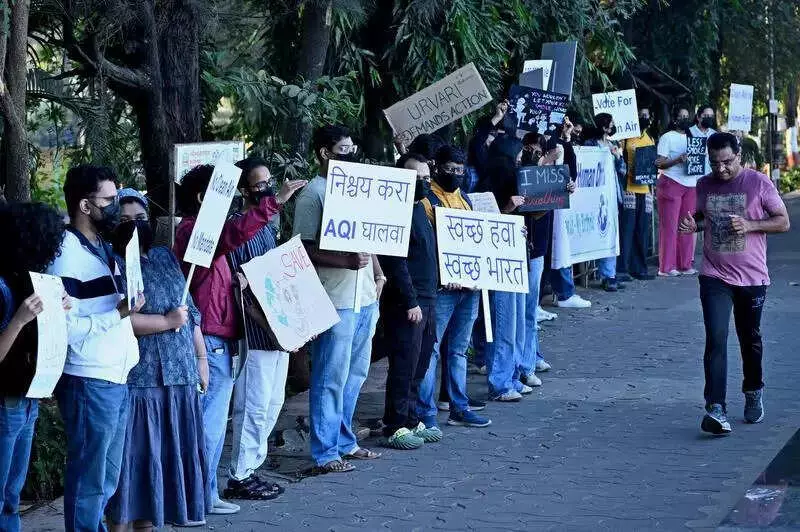
In a powerful display of civic concern, young activists in Navi Mumbai created a silent human chain along the Vashi mini seashore this Saturday. Their core demand was clear: make clean air a central issue in the upcoming municipal elections scheduled for January 15, 2026.
A Silent Stand for the Right to Breathe
Dozens of participants gathered at Sector 10-A's seafront as early as 7 am, standing shoulder-to-shoulder for nearly two hours. This was not a protest, organizers clarified, but a collective civic expression of deep worry over deteriorating air quality and its severe health impacts. They held placards with stark messages like "Breathing is Injurious to Health" and "Vote for Clean Air," turning a routine morning for joggers and walkers into a moment of reflection. Many passersby paused, expressing solidarity with the cause, with one resident on the promenade succinctly noting, "We are all victims of this pollution."
Identifying Pollution Sources and a Green Solution
The initiative, organized by environmental groups Urvari and the NatConnect Foundation, aimed to shift public and political discourse. B N Kumar, director of NatConnect Foundation, insisted that air pollution must stop being a peripheral concern. "Clean air has to be an election issue," he stated, urging voters to directly question political candidates on their environmental commitments.

Participants pinpointed several major sources of pollution plaguing the city:
- Unchecked construction dust from large-scale redevelopment projects.
- Reckless quarrying activity.
- The rapid spread of ready-mix concrete plants along the Uran–Panvel Road corridor.
- Ageing dump trucks and poorly maintained commercial vehicles emitting thick black smoke in residential zones.
As a concrete solution, activists championed the strict enforcement of the 3-3-300 urban planning rule. This principle ensures every resident can see at least three trees from their home, lives within 300 metres of a green space, and that neighbourhoods maintain a minimum 30% tree canopy cover.
Building Public Pressure and Scientific Backing
Vasudhara Gupte, director of Urvari, outlined their action plan, which includes volunteers personally monitoring construction dust, alerting pollution control authorities, and launching a signature campaign to build public pressure for stronger enforcement. The movement gained backing from the scientific community as well. Vini Sandhu of the Indian Women Scientists Association emphasized the urgent need to expand green cover, calling trees the city's most effective and affordable "natural oxygen plants."
Urvari coordinator Siya Gupta highlighted the compounded health risks due to weak enforcement of dust-control norms and emission standards, particularly for children, the elderly, and people with respiratory conditions. Through this youth-led action, organizers delivered a clear pre-election warning: clean air and public health are non-negotiable civic rights for the people of Navi Mumbai.






