Jaipur HPV Vaccination Drive Faces Major Setback with Poor Initial Coverage
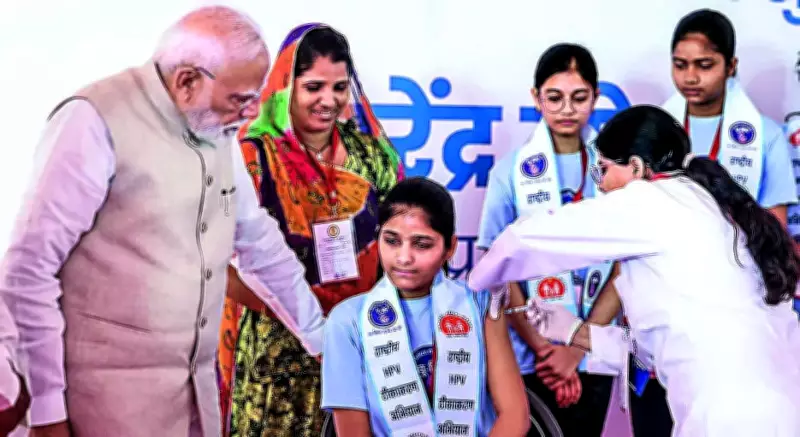
Nearly 50 days after Prime Minister Narendra Modi launched the HPV vaccination programme in Ajmer on February 27, the Rajasthan health department has identified alarmingly low coverage across most districts. Officials have now ordered an accelerated rollout of this critical cervical cancer prevention campaign.
Ambitious Targets Meet Slow Reality
The state aims to vaccinate approximately 8.3 lakh girls annually, with those aged 14–15 forming the primary target group. A three-month grace period has been established for girls who turn 15 to complete their vaccination within the eligibility window. However, progress has been disappointingly slow.
In the first 50 days, only 7,720 girls aged 14 received the HPV vaccine across 2,795 sessions. This translates to an average of just three vaccinations per session, far below official expectations and campaign targets.

New Directives and Enhanced Mobilization Efforts
Health authorities have now directed officials to ensure 100% coverage among all eligible girls. Both government and private schools have been instructed to actively motivate students and connect them with nearby vaccination sites. Simultaneously, anganwadi workers will mobilize beneficiaries at the grassroots level to improve participation.
To significantly boost vaccination numbers, fresh targets have been assigned to frontline health workers:
- Community health officers, auxiliary nurse midwives, and ASHA workers must mobilize at least 10 girls per vaccination session
- Primary health centre and session in-charges must ensure attendance of at least 50 girls at each session
Special Campaigns and Expanded Infrastructure
A seven-day special campaign will soon be launched in districts demonstrating particularly low coverage. Authorities have also indicated they may open additional vaccination centres at government medical institutions if required to improve accessibility.
Officials emphasized that all eligible girls must be registered on the U-WIN platform and vaccinated according to national guidelines. Multiple departments—including women and child development, education, rural development, and Panchayati Raj—have been tasked with intensifying awareness campaigns and countering vaccine hesitancy within communities.
Medical Context and Vaccine Safety Assurance
Reproductive and Child Health Director Dr. Madhu Rateshwar highlighted the critical importance of the vaccination drive, noting that cervical cancer is the second most common cancer among women after breast cancer. She emphasized the urgent need for prevention through vaccination.
Dr. Rateshwar further assured that the HPV vaccine is safe, effective, and provided free of cost to the target group, addressing potential concerns about vaccine safety and accessibility.
Technical Specifications of the Vaccination Programme
- Eligible girls: 8,32,836 annually
- Vaccine used: Gardasil-4 (quadrivalent)
- Dose: 0.5 ml, administered intramuscularly
- Site: Left upper arm
The health department's renewed push comes as a response to the disappointing initial numbers, with officials determined to transform the campaign's trajectory through enhanced mobilization, targeted interventions, and expanded infrastructure.