Gujarat Study Exposes High Anaemia Prevalence in Adolescent Girls
A comprehensive health study focusing on adolescent girls in Gujarat has unveiled a concerning scenario, revealing that nearly 40% of the surveyed participants are affected by anaemia. This research, which examined 750 girls aged between 10 and 19 years from five distinct districts, highlights significant public health challenges in the region.
Study Details and Methodology
The investigation, titled 'Anaemia Prevalence and Its Determinants Among Adolescent Girls in Gujarat, India: A Cross-Sectional Study', was recently published in the Indian Journal of Community Medicine. Conducted by a team including Shalu Chaudhary, Varsha Gadhavi, Somen Saha, A M Kadri, and Deepak Saxena from the Indian Institute of Public Health (IIPH) Gandhinagar and the State Health System Resource Centre, the study employed a rigorous approach. Researchers analyzed data from two rural districts (Kutch and Junagadh), two tribal districts (Valsad and Banaskantha), and one urban center, Ahmedabad. They assessed various parameters such as food diversity, WASH (water, sanitation, and hygiene) conditions, and blood samples to identify underlying issues contributing to anaemia.
Key Findings on Anaemia Causes
The results indicate that poor dietary habits and insufficient micronutrient intake are primary drivers of anaemia among these girls. Specifically, the study found that:

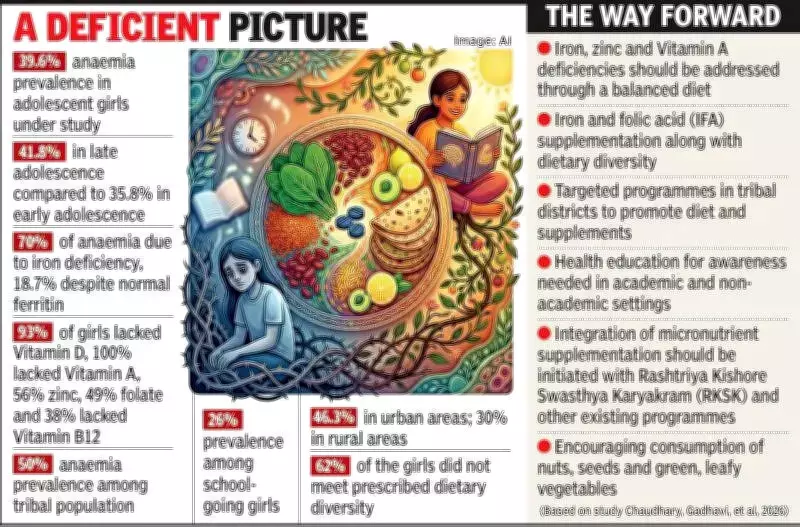
- Iron deficiency accounted for approximately 70% of anaemia cases.
- About 18.7% of the girls exhibited anaemia despite having normal ferritin levels, suggesting other factors at play.
- Micronutrient deficiencies, including lack of vitamins D, A, and B12, were identified as major contributors.
- Additionally, 56% of participants had lower than prescribed zinc levels, and 49% showed low folate levels.
Regional Variations and Dietary Insights
The prevalence of anaemia varied across different populations, with tribal areas showing the highest rate at 50%, compared to 46.3% in urban settings and 30% in rural regions. Furthermore, the study revealed that about 62% of the girls did not meet the recommended dietary diversity, underscoring the need for improved nutritional practices.
Expert Opinions and Recommendations
Prof Somen Saha, a nutrition expert and co-author of the study, emphasized that while historical interventions have focused on iron deficiency, current evidence points to the necessity of addressing broader micronutrient gaps. "Evidence is now conclusive towards addressing key micronutrient deficiency. This needs to be part of our broader strategy to bring about a lasting change in anaemia prevention," he stated.
Dr Chetan Trivedi, a paediatrician based in Ahmedabad, highlighted the long-term implications of anaemia, noting that it can lead to complications in adulthood, particularly affecting women's overall health and pregnancy outcomes. "Awareness about iron deficiency should be more primary to ensure it from natural sources through food," he added, advocating for enhanced dietary education and access to nutrient-rich foods.
Conclusion
This study serves as a critical wake-up call for public health initiatives in Gujarat, urging a shift towards comprehensive nutritional strategies that go beyond iron supplementation to include a focus on essential vitamins and minerals. Addressing these deficiencies through targeted interventions could significantly improve the health and well-being of adolescent girls across the state.