Virudhunagar Assembly Constituency Braces for Multi-Cornered Contest in 2026
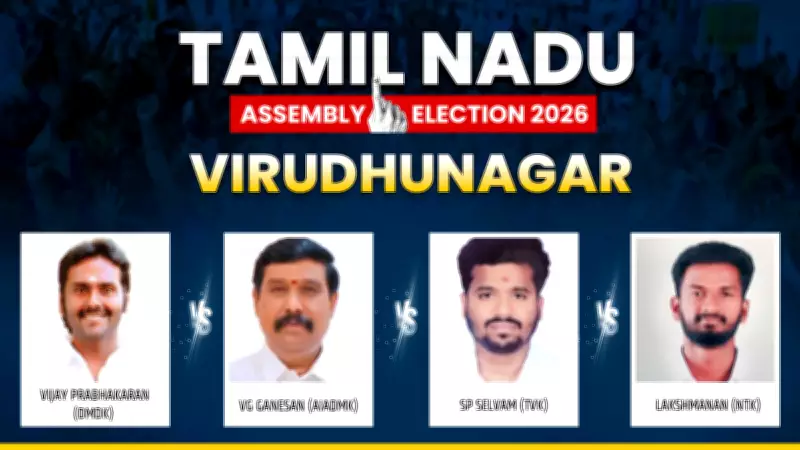
The political landscape in Tamil Nadu's Virudhunagar Assembly constituency is heating up as the 2026 state elections approach, with four major candidates poised for a fierce electoral battle. The contest features VG Ganesan from the All India Anna Dravida Munnetra Kazhagam (AIADMK), Vijay Prabhakaran representing the Desiya Murpokku Dravida Kazhagam (DMDK), KV SP Selvam of the Tamizhaga Vettri Kazhagam (TVK), and NTL Lakshmanan from the Naam Tamilar Katchi (NTL). This multi-cornered fight is expected to be one of the most closely watched races in the state, with each party vying for dominance in this key region.
Key Candidates and Their Political Backgrounds
VG Ganesan (AIADMK) brings the weight of a major regional party with a strong historical presence in Tamil Nadu. The AIADMK, a former ruling party, aims to reclaim its influence, and Ganesan's campaign will likely focus on leveraging the party's legacy and grassroots network. His strategy may emphasize governance experience and development promises to appeal to traditional voters.
Vijay Prabhakaran (DMDK) represents a party known for its anti-establishment stance and appeal among certain voter segments. The DMDK has previously made inroads in Tamil Nadu politics, and Prabhakaran's candidacy could attract disenchanted voters looking for an alternative to the mainstream parties. His campaign might highlight issues like corruption and social justice to resonate with the electorate.

KV SP Selvam (TVK) is from a newer political entity, the Tamizhaga Vettri Kazhagam, which has been gaining traction in recent years. Selvam's entry adds a dynamic element to the race, potentially drawing support from younger voters and those seeking fresh leadership. The TVK's platform likely focuses on regional pride and innovative policies to differentiate itself from established parties.
NTL Lakshmanan (Naam Tamilar Katchi) represents a party with a strong ideological base centered on Tamil nationalism and identity. The NTL has a dedicated following, and Lakshmanan's campaign is expected to emphasize cultural issues and local autonomy. This could appeal to voters passionate about Tamil heritage and rights, making him a significant contender in the mix.
Voter Dynamics and Potential Winner Margin
The Virudhunagar constituency has a diverse electorate, with factors such as caste, community, and economic interests playing crucial roles in voting patterns. Historically, the area has seen competitive elections, and the 2026 contest is projected to be no different. Analysts suggest that the winner margin could be narrow, given the evenly matched candidates and fragmented voter base. Key issues likely to influence the outcome include local development, employment opportunities, and social welfare schemes.
Recent trends indicate a shift away from traditional two-party dominance in Tamil Nadu, with smaller parties gaining ground. This could lead to a scenario where the victory margin is determined by a few thousand votes, making every campaign effort critical. Voter turnout and last-minute alliances might also impact the final result, adding an element of unpredictability to the race.
Broader Implications for Tamil Nadu Politics
This election in Virudhunagar is not just a local affair but a microcosm of the larger political realignment in Tamil Nadu. The presence of multiple strong candidates reflects the evolving party system, where regional and ideological parties are challenging established giants. The outcome could signal broader trends for the 2026 state elections, influencing strategies of major parties across Tamil Nadu.
Moreover, the focus on Virudhunagar highlights the importance of Assembly constituencies in shaping state governance. As parties invest resources here, it underscores how local issues and candidate appeal are becoming increasingly pivotal in Indian politics. Observers will be closely monitoring voter sentiment and campaign developments in the lead-up to the polls.

In summary, the Virudhunagar Assembly election of 2026 promises to be a gripping contest with AIADMK, DMDK, TVK, and NTL locked in a tight race. The winner margin is anticipated to be slim, driven by complex voter dynamics and the candidates' ability to connect with the electorate. This battle will not only decide local representation but also offer insights into the future direction of Tamil Nadu's political landscape.