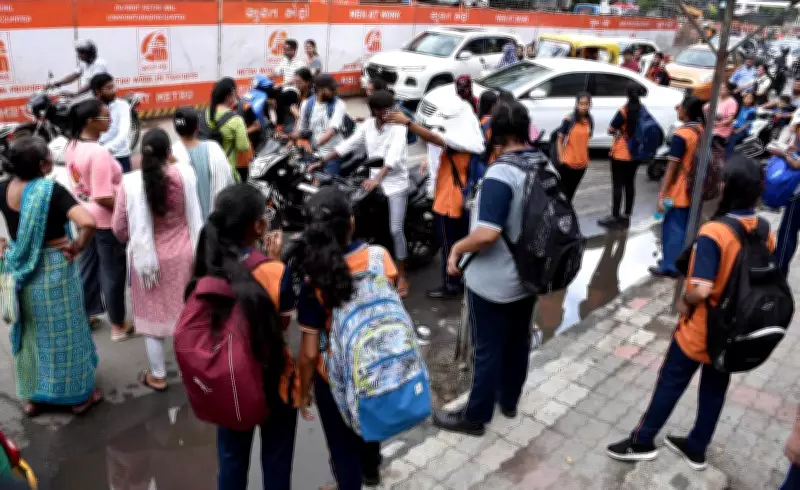
In Maharashtra, family planning is a choice for men, but a desperate and painful decision for women. Societal norms funnel contraceptive responsibility onto women, although vasectomy is quicker, safer and less invasive, official data reveals, exposing a stark and persistent gender gap in sterilisation.
Dr Rajshree Dhawale, assistant director of the state family welfare department, said, “We live in a patriarchal society and the burden of family planning automatically falls on the woman.” Men have a misconception that vasectomies may affect their sexual performance and reduce potency, she added. “We conduct various campaigns in government hospitals and maternity centres targeting new fathers to undergo the procedure and clarify misinformation, but they refuse. Women go for tubectomy during delivery since that way it is easier and time saving,” Dhawale explained.
The disparity between female and male sterilisation in India is primarily social rather than medical, said Dr Hrishikesh Pai, consultant gynaecologist and IVF specialist at Lilavati Hospital in Mumbai. “There remains a widespread misconception that vasectomy affects masculinity, sexual performance or physical strength. These beliefs are scientifically incorrect, but continue to influence decision-making,” he noted.

Medical experts stressed that the two procedures are not equivalent in bodily burden. “Tubectomy is an intra-abdominal surgery. Even if it is safe, it requires anaesthesia and carries recognised risks of bleeding, infection, wound problems and pelvic pain. Recovery can take several weeks,” said Dr Meenakshi Dinde, consultant OBGY at Surya Mother and Child Super Speciality Hospital. “While vasectomy works outside the abdominal cavity, usually done under local anaesthesia and recovery is typically only a few days. It does not affect testosterone, erections, ejaculation or sexual desire.”
Dr Santosh Sidid, head of the department of obstetrics and gynaecology at Noble Hospitals and Research Centre, said, “Many times, women prefer tubectomy because they fear something might go wrong with their male partner. They want to sacrifice themselves when it comes to surgery.” Sidid also noted that from a surgeon’s perspective, vasectomies are more complicated than tubectomies, influencing public healthcare initiatives. “Specific training is needed for stitchless surgery. Special instruments are required for vasectomy, the remuneration is very low compared to tubectomies, and the process is difficult to perform in the cold season. In case of tubectomies, routine instruments are needed and it can be performed year-round. Instant results are seen after tubectomies, whereas males are declared sterile only after a few weeks following semen analysis.”
The government offers Rs 1,500 as an incentive for each man undergoing vasectomy, but officials acknowledge that financial aid alone fails to counter social stigma. Until social attitudes and health-system priorities change, the burden of surgical contraception will continue to fall disproportionately on women. Pai said, “The long-term impact of repeated reproductive surgeries on women should not be underestimated. Many women may undergo caesarean sections, gynaecological procedures and eventually sterilisation, adding to their cumulative surgical burden. Every surgery carries some risk of infection, bleeding, adhesions, chronic pelvic discomfort and psychological stress.”