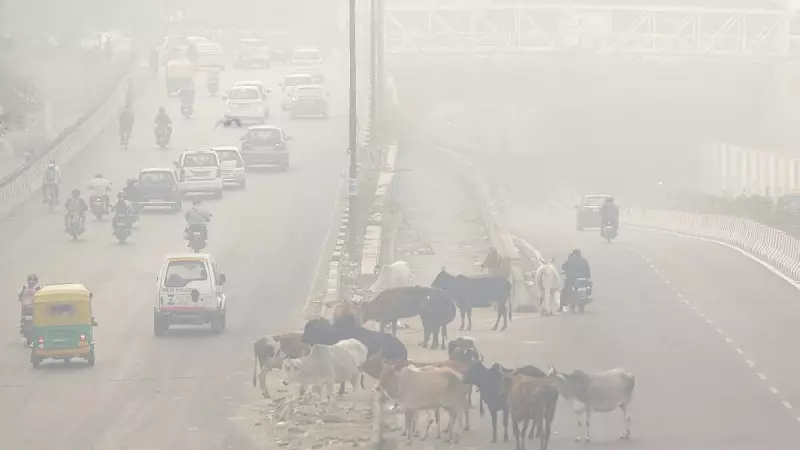
Delhi's Air Quality Reaches Dangerous Levels
The national capital woke up to another day of hazardous air quality on Saturday, with the Central Pollution Control Board (CPCB) recording an average Air Quality Index (AQI) of 335 at 9 am. This alarming reading placed Delhi firmly in the 'red zone' and made it the most polluted city across India.
Government's Multi-Pronged Strategy
In response to the escalating pollution crisis, the Delhi government has activated a comprehensive action plan featuring several key interventions. The administration is implementing staggered office timings to reduce peak-hour traffic congestion and vehicle emissions that contribute significantly to the city's poor air quality.
Another technological measure being deployed includes the use of anti-smog guns across various pollution hotspots in the city. These devices spray fine water droplets into the air to settle dust and particulate matter, providing temporary relief from the choking smog.

Immediate Measures and Long-term Planning
The current situation underscores the urgent need for both immediate interventions and sustainable long-term solutions. With the AQI reading of 335 recorded on November 8, 2025, environmental experts emphasize that Delhi residents should take necessary precautions, especially those with respiratory conditions.
The government's approach combines regulatory measures with technological solutions, though environmental activists argue that more systemic changes are needed to address the root causes of Delhi's perennial air pollution problem.