

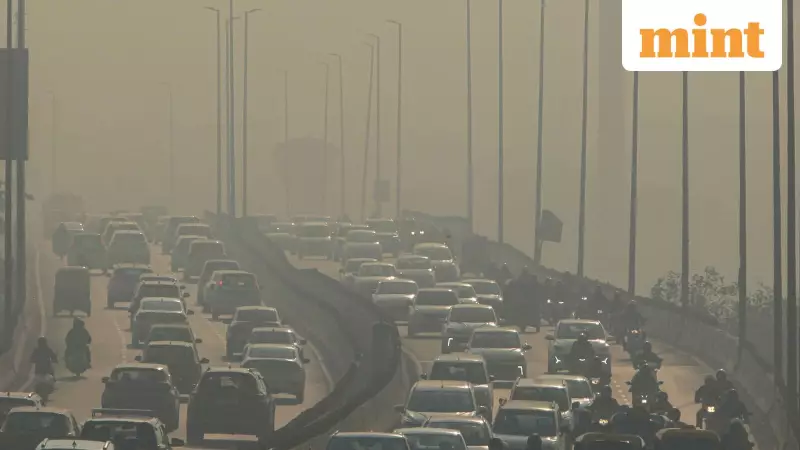
Delhi's Air Crisis Deepens as AQI Touches 384
Delhi residents woke up to another day of hazardous air on Friday, November 28, 2025, with the air quality index reaching 384 at 7:00 AM. The capital's atmosphere remained firmly in the 'very poor' category for the fourteenth consecutive day, showing no signs of improvement despite recent regulatory changes.
Air Quality Deteriorates Post Restrictions Lift
The alarming air quality reading comes just one day after the Commission for Air Quality Management (CAQM) in NCR decided to lift Stage-3 restrictions of the Graded Response Action Plan (Grap). According to data from the Central Pollution Control Board (CPCB), the 24-hour average AQI recorded at 4 PM on Thursday was 377, which climbed to 381 by 8:00 PM and continued its upward trend throughout the night.
Several monitoring stations across the city reported AQI levels in the 'severe' category during Thursday evening, indicating the rapid deterioration of air quality. The current AQI of 384 places Delhi dangerously close to the 'severe' classification, which begins at 401 AQI.

No Immediate Relief in Sight
Forecasts from both the India Meteorological Department (IMD) and the Indian Institute of Tropical Meteorology suggest that Delhi's air will continue to remain in the "very poor" category in the coming days. The temperature is also expected to stay below average, creating conditions that typically trap pollutants closer to the ground.
The CPCB's air quality classification system defines AQI between 201-300 as "poor," 301-400 as "very poor," and 401-500 as "severe." Delhi's current position at 384 AQI represents a significant health concern for the city's residents, particularly those with respiratory conditions.
The visual evidence of the crisis was starkly visible on Thursday morning, when vehicles moved through thick smog on the Barapullah flyover, creating scenes that have become increasingly familiar during Delhi's winter months. The persistent pollution levels indicate that the city's air quality management challenges remain unresolved despite various intervention measures.






