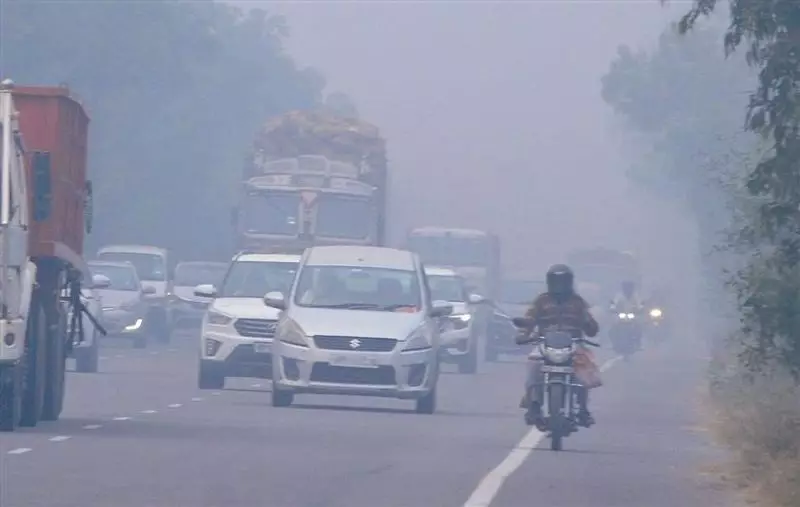
The national capital continues to gasp for clean air as Delhi's overall air quality remained firmly in the 'very poor' category on Monday. The alarming pollution levels show no immediate signs of improvement, posing serious health risks to millions of residents.
Current Air Quality Status and Measurements
According to the latest data from monitoring agencies, the overall Air Quality Index (AQI) in Delhi stood at 346, maintaining its position in the 'very poor' range. The situation appeared even more severe in specific areas across the city, with the AQI at Delhi University reaching 374, inching closer to the 'severe' category threshold of 400.
Other monitoring stations reported similarly concerning numbers. Noida recorded an AQI of 348, while Gurugram registered 324, both falling within the 'very poor' classification that signifies increased likelihood of respiratory illness upon prolonged exposure.

Meteorological Factors Preventing Improvement
Experts from the System of Air Quality and Weather Forecasting and Research (SAFAR) identified specific weather conditions as the primary reason for the persistent pollution. Wind speeds remained low at approximately 6-8 km/hour, insufficient to disperse the accumulated pollutants effectively.
The forecasting agency provided a grim outlook, stating that the air quality is likely to remain in the 'very poor' category for the next 2-3 days. This prediction comes despite some expectations of slight improvement that failed to materialize due to unfavorable meteorological conditions.
SAFAR's analysis indicated that calm wind conditions during the night are particularly problematic, as they allow pollutants to accumulate near the surface rather than being dispersed. This pattern creates a buildup effect that carries over into subsequent days, making significant improvement difficult without substantial changes in weather patterns.
Health Implications and Recommended Precautions
The persistent 'very poor' air quality carries significant health consequences, particularly for vulnerable groups. Medical professionals have noted increased complaints of respiratory distress, eye irritation, and exacerbation of existing lung conditions among Delhi residents.
Health advisories associated with this AQI level recommend that children, elderly individuals, and people with heart or lung diseases should avoid prolonged outdoor activities. Even healthy adults are advised to reduce heavy exertion outdoors and consider wearing N95 or P100 masks when outside for extended periods.
The current situation underscores the ongoing challenge of air pollution management in the national capital region, particularly as meteorological conditions continue to hinder dispersion mechanisms. Authorities continue to monitor the situation closely while residents await favorable weather changes that might bring some relief from the hazardous air.