

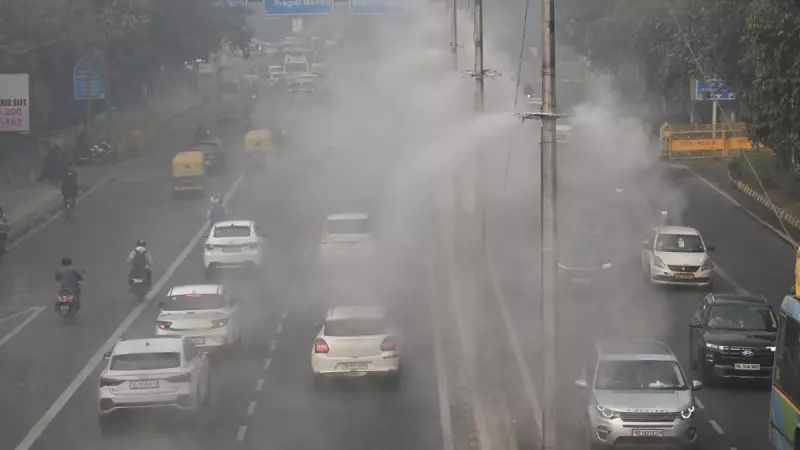
The national capital region woke up to a familiar and hazardous blanket of grey on Saturday, as air quality plummeted dangerously close to the 'severe' category once more. A thick layer of smog engulfed Delhi and its surrounding areas, significantly reducing visibility and raising serious health concerns among residents and authorities.
Alarming Dip in Air Quality Index
According to data from the System of Air Quality and Weather Forecasting and Research (SAFAR), the overall Air Quality Index (AQI) for Delhi was recorded at 398, teetering on the brink of the 'severe' classification, which begins at 401. This marked a severe deterioration from previous days, indicating a rapid accumulation of pollutants. Monitoring stations across the city painted a grim picture, with several areas, including Delhi University and Pusa, already registering readings in the 'severe' zone.
The primary culprit behind this dangerous spike was identified as particulate matter. The concentration of PM2.5, the fine and most harmful inhalable particles, became the dominant pollutant. The 24-hour average concentration of PM2.5 was recorded at 258 micrograms per cubic metre (µg/m³), which is more than four times the safe limit of 60 µg/m³ prescribed by Indian standards. Similarly, the level of the slightly larger PM10 particles stood at 418 µg/m³, vastly exceeding the safe limit of 100 µg/m³.

Weather Conditions Worsen the Crisis
Meteorological factors played a significant role in trapping the pollutants close to the ground. Weather analysts pointed to calm wind conditions and a drop in temperature as key contributors. The lack of strong winds prevented the dispersal of the toxic haze, while cooler temperatures led to the formation of a dense smog layer that lingered over the region. This combination effectively acted as a lid, sealing in the pollution emitted from various sources.
The situation was visually apparent across the National Capital Region. Landmarks that are usually visible were shrouded in a persistent grey haze, and the sun struggled to break through the thick blanket of pollution. Residents reported a return of the familiar burning sensation in the eyes and throat, with many opting to stay indoors or use protective masks when venturing outside.
Health Advisories and Forecast
In response to the deteriorating conditions, authorities and health experts issued urgent advisories. The public, especially children, the elderly, and individuals with pre-existing respiratory or cardiovascular conditions, were advised to avoid prolonged or heavy exertion outdoors. Limiting outdoor activities and wearing N95 or P100 masks when outside were strongly recommended. People were also urged to keep windows closed and use air purifiers indoors to create cleaner air pockets.
The forecast from SAFAR offers little immediate relief. The agency predicts that the air quality is likely to remain in the 'very poor' to the higher end of the 'poor' category for the next few days. A significant improvement is not expected until there is a noticeable change in the weather pattern, such as an increase in wind speed or rainfall, which could help scatter the accumulated pollutants.
This recurring episode underscores the persistent and complex challenge of air pollution in Delhi-NCR, a public health emergency that resurfaces with alarming regularity, disrupting daily life and posing long-term risks to the population's well-being.






