

Andhra Pradesh Confronts Escalating Water and Foodborne Disease Crisis
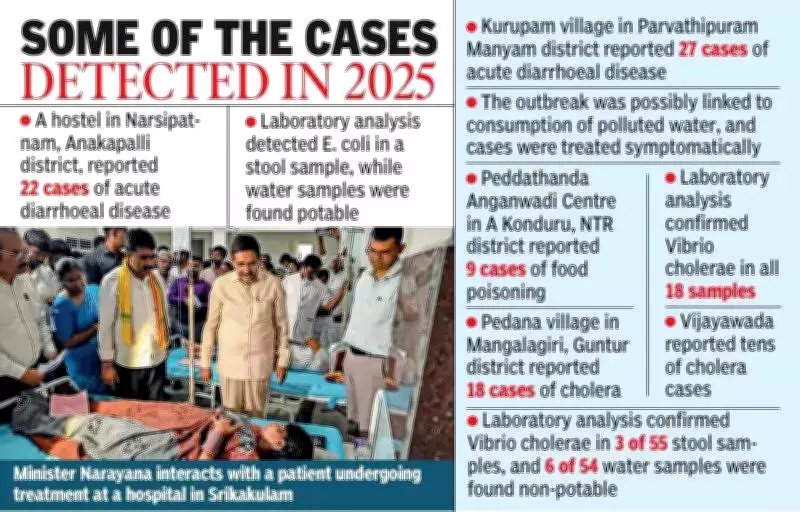
Visakhapatnam: Andhra Pradesh is currently grappling with a significant increase in illnesses attributed to waterborne and foodborne infections, marking a concerning shift in the state's public health landscape. The latest alarming incident involves a diarrhoea outbreak in Srikakulam district, which has affected more than 100 individuals, with 102 confirmed cases and one reported fatality as of the latest updates.
Historical Context and Underreporting Issues
Over the past three years, the state has consistently reported an average of 800 to 900 such cases annually. However, these official statistics likely underestimate the true burden, as many instances of food poisoning and diarrhoea, particularly in rural and semi-urban areas, go unreported due to limited healthcare access and awareness.
This rise in water- and food-related illnesses represents a noticeable departure from the previously dominant vector-borne diseases such as malaria, dengue, and chickenpox, which have long been focal points in Andhra Pradesh's public health discussions.

Detection of Multidrug-Resistant Pathogens
Investigations into recent outbreaks have uncovered the presence of multidrug-resistant microorganisms in water and food samples collected from affected regions. Key pathogens identified include:
- Escherichia coli (E. coli): A critical indicator of faecal contamination that can cause severe gastrointestinal distress.
- Klebsiella pneumoniae: An opportunistic bacterium that poses serious infection risks, especially to vulnerable populations.
- Pseudomonas species: Another opportunistic pathogen complicating treatment efforts.
The emergence of drug-resistant strains significantly complicates medical interventions, potentially leading to prolonged illnesses, increased hospitalisation rates, and higher mortality. In some cases, outbreaks have also involved Vibrio cholerae, the bacterium responsible for cholera, which can cause rapid dehydration and death if left untreated.
Recent Outbreak Case Studies Across Districts
A series of outbreaks across various districts underscores the widespread nature of this public health challenge:
- In November 2025, a private educational institution in Guntur district reported an acute diarrhoeal disease outbreak with 457 cases of vomiting and loose stools. Laboratory tests confirmed Klebsiella contamination in multiple water samples.
- October 2025 saw an outbreak in SC Colony, Guttikonda village of Palnadu district, where three out of five water samples were deemed bacteriologically unsatisfactory.
- February 2025 witnessed 19 cases and two deaths in Atmakur, Nandyal district. Analysis detected Klebsiella in a stool sample and identified Pseudomonas and E. coli in several water samples.
- In August 2024, B. Palyem village in Chittoor district reported a cholera outbreak with 71 cases, with laboratory confirmation of Vibrio cholerae and unfit water samples.
- Gurla in Vizianagaram district experienced a severe diarrhoeal outbreak in October 2024, resulting in several deaths. Testing revealed 31 out of 44 water samples contained coliform bacteria, indicating extensive faecal contamination.
Tragic Incidents and Systemic Failures
In a particularly tragic event in August 2024, three tribal children died and approximately 40 others were hospitalised following a food poisoning episode at a shelter home in Kailasapatnam, Anakapalli district. Additionally, a severe outbreak of melioidosis in Turakapalem village near Guntur by early September 2025 led to several deaths, caused by the bacterium Burkholderia pseudomallei.
The state government has identified multiple systemic gaps contributing to these outbreaks, including:

- Faecal contamination of drinking water sources.
- Leakages in pipelines, especially where they pass through drains.
- Use of motors that create negative pressure, allowing contamination.
- Inadequate chlorination processes.
- Poorly maintained overhead tanks.
Weak monitoring of water quality and delayed patient referrals, often after initial treatment by unqualified rural medical practitioners, have exacerbated the situation. Underreporting further obscures the true scale of this public health challenge.
Government Response and Future Measures
State Health Minister Satya Kumar Yadav has affirmed that all necessary measures are being implemented in coordination with relevant government departments to prevent drinking water contamination and reduce diarrhoea cases. Efforts are focused on strengthening infrastructure, enhancing monitoring systems, and improving public awareness to mitigate future outbreaks.





