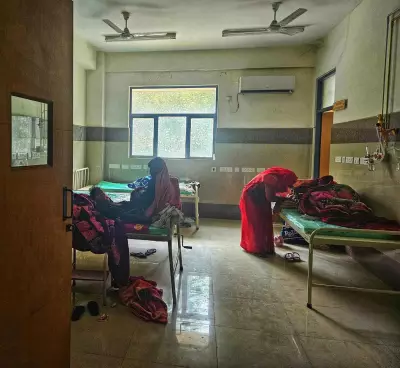
The recent tragedy in Indore's Bhagirathpura, where sewage contamination in drinking water claimed 16 lives and hospitalized hundreds, serves as a grim and urgent warning for cities across India. For Ahmedabad, this incident is not a distant horror but a cautionary tale echoing its own recurring public health nightmare.
A Legacy of Neglect and Recurring Outbreaks
Ahmedabad's vulnerability to waterborne diseases due to ageing and neglected infrastructure is a documented crisis. The city was starkly reminded of this in November 2014 when a severe jaundice outbreak hit the Saraspur area, exposing the dangerous mixing of sewage with potable water. More than a decade later, promises to permanently resolve this critical issue remain largely unfulfilled.
In a concerning revelation from November 2025, the Ahmedabad Municipal Corporation (AMC) itself identified 26 pockets in the eastern part of the city as high-risk zones. This list includes eight chawls located near Shardaben Hospital, highlighting specific communities living under constant threat.

The Stark Numbers Behind the Crisis
Official AMC data paints a worrying picture of the city's health burden linked to contaminated water. Over the past three years, the city has recorded 404 confirmed cholera cases: 95 in 2023, 202 in 2024, and 107 in 2025. The figures for diarrhoea and vomiting are even more alarming, with reports of 6,847 cases in 2023, 9,979 in 2024, and 6,037 in 2025.
While the AMC claims no cholera deaths occurred during this three-year window, Right to Information (RTI) records from five civic hospitals tell a broader and more tragic story. The data from 2015 to May 2025 reveals the devastating human cost:
- 71,886 diarrhoea cases resulting in 182 deaths.
- 14,918 typhoid cases leading to 23 deaths.
- 18,292 jaundice cases with a staggering 253 fatalities.
Patchwork Solutions and a Persistent Structural Problem
In response to outbreaks, the AMC has initiated measures like chlorine tablet distribution campaigns targeting vendors in high-risk areas. However, these efforts have failed to stop the contamination at its source. The root cause lies in the city's crumbling water delivery system.
A senior AMC official candidly explained the structural failure: "Leaks occur because water supply pressure is low, which prompts residents to resort to illegal pumping. In some areas, these illegal connections directly damage the pipelines. With sewage and drinking water lines running in close proximity, any breach allows for deadly mixing." The official added that while each cholera case triggers an investigation and local repair, the fundamental structural problem remains unaddressed.
The situation in Ahmedabad underscores a national urban challenge. The Indore tragedy is a wake-up call, but for Ahmedabad's residents, it is a recurring reality. Without a massive, sustained investment in replacing and upgrading the ageing water and sewage network, the cycle of contamination, illness, and preventable deaths is doomed to repeat.