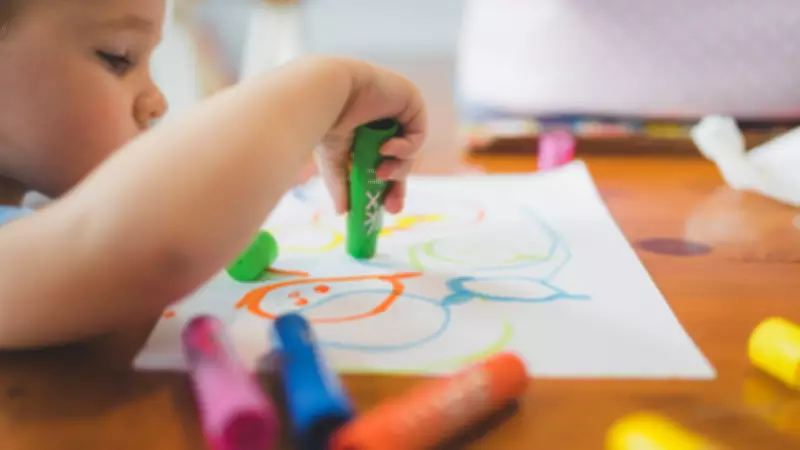
Drawing may look like a simple childhood pastime, but research suggests it is doing far more than filling blank pages. It engages perception, memory, motor control and even early social understanding, turning a quiet activity into a powerful mental exercise. For young children, each line and shape becomes part of how they process the world and what they see, feel and remember. Over time, this simple habit begins to support multiple areas of brain development at once, often without adults even realising it. Here are six research-backed benefits of drawing for a child’s developing brain.
It strengthens fine motor control
Holding a crayon, controlling pressure and making deliberate marks all require precision. Research on motor development shows that motor skills are closely tied to cognitive benefits in children and adolescents, and studies of drawing in children connect drawing with motor and visuospatial skills. That makes drawing a useful everyday workout for little hands and developing brains.
It supports executive function
Drawing is not random scribbling when a child is trying to represent something on purpose. A toddler’s drawing is linked with working memory, inhibition and shifting, the core executive functions that help children stay focused, control impulses and move between ideas. In plain terms, drawing asks a child to plan, adjust and persist.

It helps language grow
One of the most interesting findings in recent research is that drawing and language develop together in early childhood. In very young children, drawing and language are distinct but strongly connected systems, and executive function plays an important role in that relationship. Drawing can help children represent what they know before they have the perfect words for it.
It builds memory and recall
When children draw, they are not only making marks, they are also retrieving information and turning it into a visual form. A recent review explains that drawing production depends partly on memory, while another study found that drawings can reveal changes in what people remember over time. For children, that means drawing can become a gentle way to practise recall and organise thoughts.
It encourages creativity and flexible thinking
Research reviews in children and adolescents show a clear relationship between executive flexibility and creativity. In other words, the more a child can shift, imagine and reframe, the more freely creative thought can flow. Drawing gives that flexibility a place to land: a house can have five windows, the sun can be green, and a stick figure can become a whole story.
It gives children a safe emotional outlet
Children do not always explain feelings in neat sentences. Research and studies suggest drawings can function as a window into a child’s inner world, capturing feelings, perceptions and emotional states. Separate studies also show that drawing can improve short-term mood when used as a distraction activity. For many children, a page and a pencil are often easier than a direct conversation.