

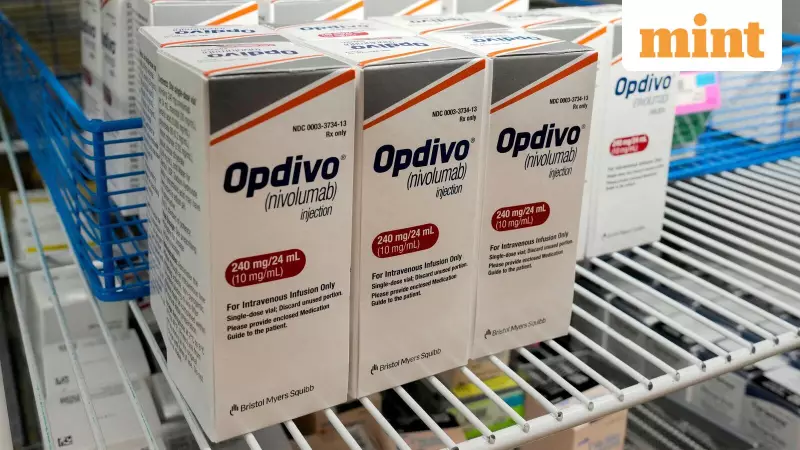
In a significant development for cancer treatment accessibility in India, pharmaceutical major Zydus Lifesciences has launched its biosimilar version of the critical anti-cancer drug nivolumab. This launch follows a crucial clearance granted by the Delhi High Court just last week, allowing the company to market the drug at a price point substantially lower than the patented original.
Affordable Pricing and Strategic Launch
Branded as Tishtha, this biosimilar is now available in two key strengths. The company has announced pricing at ₹13,950 for a 40-mg vial and ₹28,950 for a 100-mg vial. This strategic two-strength portfolio is designed to help oncologists optimize dosing regimens for patients while minimizing medication wastage, which is a critical factor in managing the overall economics of immunotherapy treatments.
Zydus estimates that the potential patient pool for this medication in India exceeds 500,000 individuals. Nivolumab is a monoclonal antibody immunotherapy primarily used to treat advanced stages of cancers such as lung cancer and head-and-neck cancers. It belongs to a select category of targeted immunotherapy drugs available within the country.

Understanding Biosimilars and the Patent Landscape
It is important to distinguish a biosimilar from a generic drug. A biosimilar is a biological product that is highly similar to an already approved reference biologic product. It has no clinically meaningful differences in terms of safety, purity, and potency. Unlike chemical generics, biosimilars are not exact copies due to the complex nature of biological manufacturing.
The reference product for nivolumab is Opdivo, marketed in India by US-based Bristol-Myers Squibb (BMS), which holds the patent. Opdivo's pricing in the market has ranged from approximately ₹21,500 to over ₹100,000 for various dosages, making the launch of Tishtha a potential game-changer for affordability.
Delhi High Court's Landmark Decision
The path to launch was cleared by a division bench of the Delhi High Court on January 12. The court modified an earlier interim order from July 2025 that had restrained Zydus from launching the product, following a plea by BMS.
In its ruling, the court emphasized public interest, noting that nivolumab is a life-saving medication for cancer patients. A key factor was the impending patent expiry on May 2, 2026. The bench determined that the balance of convenience lay in permitting the sale of the biosimilar for the remaining patent term to ensure patient access.
As a safeguard, the court directed Zydus to maintain meticulous and detailed records of all sales during this period. This measure ensures that if BMS ultimately succeeds in its ongoing patent infringement lawsuit, it can be appropriately compensated for any sales made by Zydus.
Mechanism and Importance of Checkpoint Inhibitors
Nivolumab operates as a PD-1 checkpoint inhibitor. It functions by binding to and blocking the PD-1 protein found on the surface of certain cancer cells. This action prevents the cancer cells from suppressing the body's natural immune system. Consequently, the immune system is empowered to recognize and attack the cancer cells more effectively.
This mechanism offers a more targeted approach compared to traditional chemotherapy, which often attacks both cancerous and healthy cells, leading to significant side effects. Checkpoint inhibitors like nivolumab have emerged as a highly promising therapy for several hard-to-treat cancers.
The class has gained global prominence, with another PD-1 inhibitor, Keytruda, becoming the world's top-selling drug since 2023. While several such inhibitors, including Opdivo and Keytruda, are available in India, their high cost has remained a major barrier to widespread access for patients.
Ensuring Long-Term Treatment Dependability
Zydus highlighted a crucial aspect of cancer care in its announcement. Reliable and uninterrupted availability of checkpoint inhibitors is essential, as patients often require therapy over multiple cycles. Any interruption can add significant clinical and financial stress to patients and their families.

The company stated that Tishtha, being developed and manufactured within India, ensures long-term dependability and supply security for patients throughout their entire treatment journey. This domestic production capability is seen as a vital step in strengthening India's healthcare infrastructure for advanced oncology treatments.
The launch of Tishtha represents a pivotal moment in making advanced cancer immunotherapy more accessible and affordable for a vast number of patients in India, potentially altering the treatment landscape for several advanced cancers.





