

Wearable devices that promise to track brain health are gaining popularity, but they often face intense questioning from medical experts who demand solid proof. One such innovation, introduced by Zomato CEO Deepinder Goyal, is now at the center of this debate.
The Temple Device: A $25 Million Personal Project
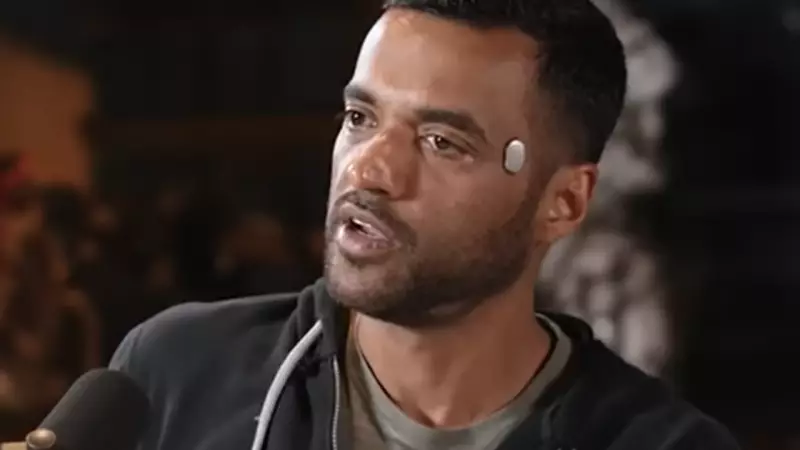
Deepinder Goyal recently unveiled the Temple device, a compact sensor designed to be worn near the temple. Its primary function is to continuously measure cerebral blood flow. Goyal has personally invested around $25 million into this project through his Eternal and Continuous Research initiatives. He has been seen wearing prototypes, including a silver version on a podcast and a gold one at public events.
The device is experimental and open-source, meaning its development is meant for community collaboration. Goyal connects the device's data to his Gravity Aging Hypothesis. This theory suggests that gravitational forces slowly reduce blood flow to the brain, which may contribute to cognitive decline over time.

Medical Experts Voice Strong Concerns
The bold claims made by the Temple device have not gone unchallenged by the medical community. Dr. Suvrankar Datta, a radiologist at AIIMS Delhi with research experience in arterial stiffness, offered a sharp critique on social media platform X.
Dr. Datta described the Temple as a "fancy toy for billionaires" with "zero scientific standing" as a legitimate medical tool. He warned consumers against spending money on unproven technology. A key point of his criticism is that measurements taken from the temple's temporal arteries are not equivalent to established, gold-standard diagnostics.
He emphasized that metrics like carotid-femoral pulse wave velocity are clinically proven to predict cardiovascular risks, unlike data from experimental wearables that haven't undergone rigorous clinical trials.
Grounds for Scientific Caution
The scientific community urges caution for several reasons. First, the Temple device's claims have not been validated through peer-reviewed studies that compare its data with established methods like Doppler ultrasound or MRI scans.
Second, readings from such a wearable can be highly variable and influenced by many factors, including a person's posture, hydration levels, and heart rate, making the results potentially unreliable for medical diagnosis.
Furthermore, the core Gravity Aging Hypothesis itself, which links gravitational force directly to brain aging, remains unproven and requires extensive scientific validation.
The Broader Implications for Neurotechnology
The Temple device represents a shift for Goyal's Eternal project, moving from a proposed longevity study into the realm of real-time cognition tracking. If scientifically validated in the future, such technology could have applications for everyone from professionals and athletes to the elderly.
However, doctors stress the importance of patience and proof. They point out that vascular health is already effectively monitored by approved medical devices. While innovation by influential figures is welcome, patient safety and proven efficacy must come first.
The ultimate role of the Temple device, whether as a valid cognitive-tracking tool or otherwise, will only become clear through ongoing, transparent, and independent clinical trials.






