A major medical symposium focusing on the life-threatening condition known as Acute Respiratory Distress Syndrome (ARDS) was held in Nagpur this week. The event, titled "ARDS – The Deadly Killer: Drying the Wet Lungs," aimed to tackle the clinical challenges and growing public health burden posed by this severe lung condition.
Gathering of Medical Minds in Nagpur
The Department of Pulmonary, Critical Care & Sleep Medicine at Nagpur's Super Speciality Hospital and Government Medical College & Hospital (GMCH) organized the focused symposium. It took place on Monday at the Late Dr Shakuntala Gokhale Memorial API Hall A. The program was held under the patronage of Dr Raj Gajbhiye, Dean of GMCH Nagpur, with Dr Avinash Gawande and Dr Sushant Meshram serving as the Medical Superintendent and Organising Chairman, respectively.
The event successfully brought together a panel of distinguished national and international experts. Attendees included Dr Satish Deopujari, an adjunct professor at IGGMCH; Dr Umakant Bhutada, a Senior Critical Care Consultant from Ipswich Hospital in Queensland, Australia; and Dr Viswesvaran B, an Interventional Pulmonologist from Yashoda Hospital, Hyderabad. Dr Smita Pakhale, a Senior Scientist and Pulmonologist from the Ottawa Hospital & Research Institute in Canada, attended as the Guest of Honour.

High Mortality and the Need for Precision Care
During his address, Dr Sushant Meshram highlighted the grave severity of ARDS, identifying it as one of the leading causes of mortality in Intensive Care Units. He revealed a startling statistic, noting that forty to fifty percent of ARDS patients succumb to the condition. He further explained that even patients who initially present with viral pneumonia can progress to develop ARDS.
Dr Meshram emphasized that fine training is essential to reduce the high mortality rate. He also expressed significant concern over ventilator-induced lung injuries, which are often caused by inadequate training and improper ventilator settings.
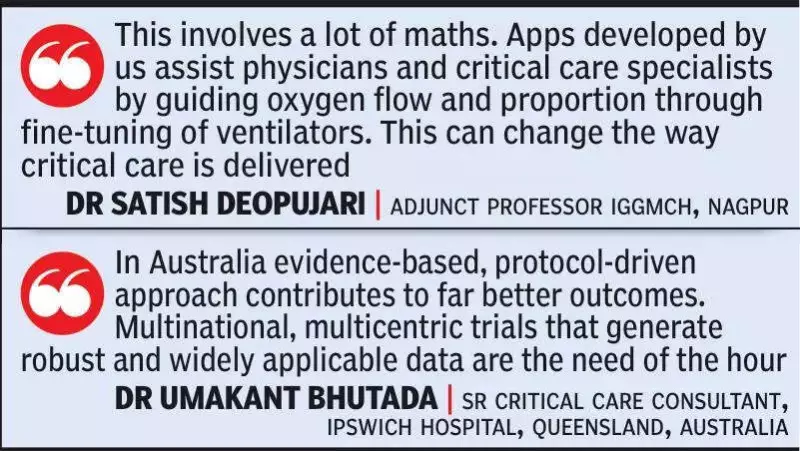
Adding a technological perspective, Dr Satish Deopujari stressed the critical function of the lungs in oxygen delivery. "This involves a lot of maths," he stated. He discussed how apps developed by his team assist physicians by guiding oxygen flow and proportion through the fine-tuning of ventilators. "This can change the way critical care is delivered," Dr Deopujari added.
Global Perspectives and Environmental Triggers
Providing an international viewpoint, Dr Umakant Bhutada shared insights from the Australian healthcare system. He pointed out that Australia's more evidence-based and protocol-driven approach contributes to better patient outcomes. Dr Bhutada stressed the importance of conducting multinational, multicentric trials to generate robust medical data that can be applied widely.
Dr Viswesvaran B turned the discussion towards environmental factors, warning that both indoor and outdoor pollution continue to drive respiratory illnesses. He noted that pollution increases pneumonia cases and worsens conditions like asthma, COPD, and Interstitial Lung Disease (ILD). While pollution may not directly cause ARDS, he explained that pollution-related pneumonia can predispose patients to developing it.
The expert also highlighted long-term risks, stating that prolonged exposure to pollutants raises lung cancer risk and can reduce lung growth in children. On a positive note, he acknowledged that awareness has risen post-COVID, but emphasized that pneumococcal vaccination rates must improve for better prevention.
Pathway Forward: Training and Collaboration
The symposium concluded with forward-looking discussions focused on key areas for improvement. The consensus among experts centered on the urgent need for enhanced training for healthcare professionals managing critical care and ventilator support. Another major takeaway was the necessity to advance research collaborations, both nationally and internationally, to foster innovation in treatment protocols. The ultimate goal remains improving critical care practices across the board to combat the deadly impact of Acute Respiratory Distress Syndrome effectively.