

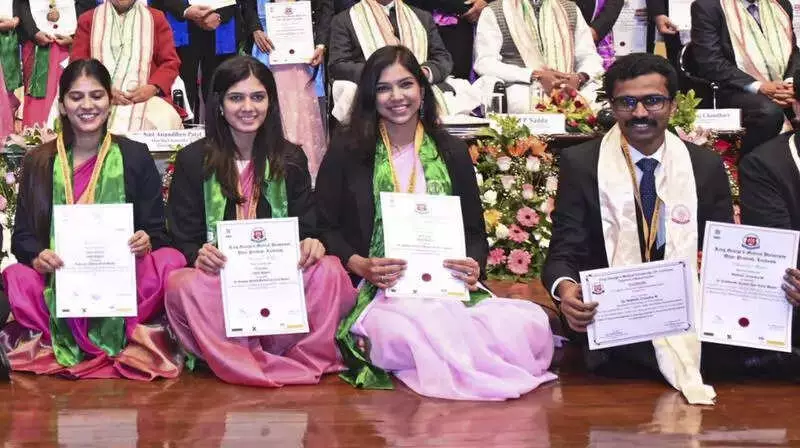
Top-ranking medical graduates from King George's Medical University (KGMU) have expressed optimism that the swift expansion of medical colleges across Uttar Pradesh will significantly improve patient care and healthcare access in the state. They shared these views on Saturday, acknowledging current infrastructure limitations but emphasising long-term benefits.
Building a Foundation for Preventive and Community Health
Dr Akshata MA, the MD Community Medicine Gold Medallist, stated that this expansion will positively influence preventive healthcare. She explained that medical colleges are pivotal for community health. Training and posting doctors locally leads to better outreach programmes, more effective disease surveillance, and improved early intervention strategies.
Echoing the sentiment on reducing systemic pressure, DM Psychiatry Gold Medallist Rakshit Tripathi said the new institutions will help ease the overwhelming burden on tertiary care hospitals. He noted that patients currently undertake long, arduous journeys to reach major medical centres. As district-level hospitals grow, early diagnosis and timely referrals will become feasible closer to patients' homes, even if the full development of infrastructure requires time.

Strengthening Systems and Manpower Through Policy
Dr Moina Wasi Khan, a graduate in hospital administration, highlighted the evolutionary nature of healthcare systems. She pointed to the service bond provisions in Uttar Pradesh, which mandate postgraduate doctors to serve the state health system for a stipulated period. This policy is designed to bolster clinical expertise and manpower in regions that are traditionally underserved.
Dr Khan admitted that new institutions inevitably face initial hurdles. However, with experience, critical functions like patient registration, interdepartmental coordination, and overall service delivery become more streamlined and efficient, leading to direct benefits for those seeking treatment.
The Path to Stabilising Academic and Clinical Standards
MD Physiology graduate Dr Sunil Paharia focused on the maturation process of these new colleges. He asserted that academic and clinical standards will stabilise as the institutions grow. Faculty strength, opportunities for research, and the quality of clinical training all develop steadily. Once firmly established, these colleges will transform into reliable hubs for both medical education and patient care.
In a separate ceremony, Dr Ajay Kumar Sood, the Principal Scientific Adviser to the Government of India, was conferred with a doctorate honoris causa. This honour recognises his exceptional contributions to the fields of science, research, and national policymaking.






