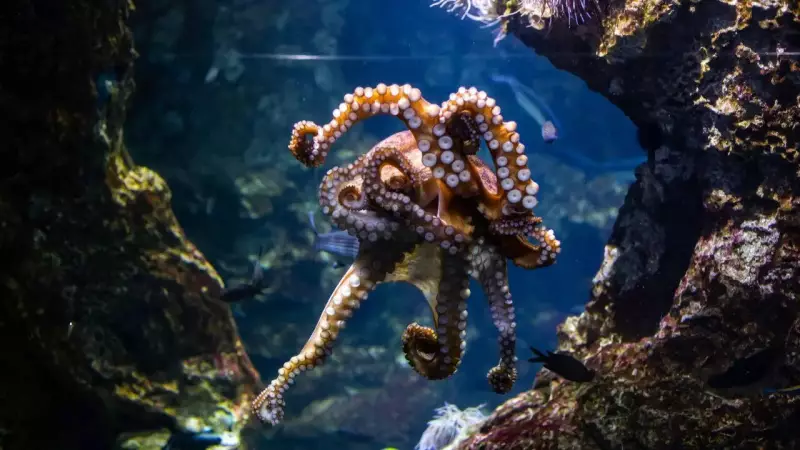
In the vast and mysterious world of marine life, the octopus stands out as one of the most alien and fascinating creatures. Its physiology presents a captivating paradox, being profoundly different from vertebrates like us, yet operating on some surprisingly similar biological principles. Recent research has zeroed in on an extraordinary ability: the octopus can continue to function even when its main heart stops. This feat has posed a significant physiological question for scientists and holds promising implications for medical fields like organ transplantation.
The Triple-Heart System: A Masterclass in Redundancy
The foundation of the octopus's exceptional endurance lies in its unique circulatory architecture. Unlike mammals with a single heart, the octopus is equipped with three hearts. Two of these, known as branchial hearts, are located at the base of the gills. Their job is to pump blood through the respiratory organs to pick up oxygen. The third, a larger systemic heart, then takes this oxygenated blood and circulates it to the rest of the body.
This division of labor becomes a lifesaver during movement. When an octopus swims via jet propulsion, its systemic heart often slows down or even stops briefly—a condition that would cause immediate suffocation in most animals. However, the branchial hearts keep working tirelessly. This ensures that oxygen uptake at the gills continues uninterrupted, maintaining a baseline blood flow. While blood pressure drops, it remains sufficient to support vital organs. This design prioritizes energy efficiency and powerful short bursts for hunting, perfectly aligning with the octopus's ambush predator lifestyle.

Biochemical Genius: Thriving on Low Oxygen
Surviving a cardiac pause isn't just about heart anatomy; it's also about cellular tolerance to low oxygen, or hypoxia. The key lies in the octopus's blood. Instead of the iron-based hemoglobin found in vertebrates, octopuses use a copper-based protein called haemocyanin to carry oxygen. Haemocyanin is remarkably efficient in cold, low-oxygen environments and has a superior ability to release oxygen to tissues even when blood flow is weak.
This biochemical adaptation, highlighted in a study on Octopus insularis published in Biology Open, allows cells to sustain aerobic metabolism for much longer without a fresh blood supply. Instead of shutting down completely and triggering a cascade of damage—as happens in human tissues during a heart attack—octopus cells simply slow their activities. This creates a crucial buffer, allowing time for circulation to resume without catastrophic injury.
Decentralized Control: The Brain in Its Arms
The octopus's resilience extends beyond its hearts and blood to its very nervous system. In a radical departure from vertebrate design, more than half of an octopus's neurons are located in its arms, not its central brain. This decentralized network allows for local control of movement and sensation.
When the systemic heart stops and central circulation drops, this distributed intelligence proves vital. The arms can remain active, gripping surfaces or making basic movements, with minimal input from the oxygen-starved central brain. This neural resilience, coupled with circulatory flexibility, forms a coordinated survival strategy. It stands in stark contrast to vertebrates, where a brief interruption of cerebral oxygen leads rapidly to unconsciousness.
Evolutionary Advantage in a Changing Ocean
Why did such a complex system evolve? The ability to tolerate cardiac pauses offers clear survival benefits. Octopuses often inhabit environments like reef crevices or tide pools where oxygen can become scarce. Being able to reduce cardiac function allows them to remain hidden and still for extended periods, conserving energy and avoiding predators.

From an evolutionary standpoint, this trait is a selection for efficiency over constant endurance. It allows for the intense, short burst of jet propulsion needed for escape, despite the cardiac interruption it causes. As climate change leads to warming oceans and declining oxygen levels (hypoxic zones), understanding such adaptations becomes increasingly urgent. The octopus provides a masterclass in survival not through constant, unwavering function, but through systems built for controlled pauses and rapid recovery.
For medical science, particularly in the field of organ preservation for transplants, the octopus's secrets are invaluable. Research into how its tissues withstand hypoxia could lead to breakthroughs in extending the viability of human organs outside the body, turning a marine mystery into a medical miracle.