

For decades, the narrative around oral cancer in India has been predominantly tied to men and their tobacco habits. However, a groundbreaking new study shifts the focus to women, particularly in regions like Karnataka's Kolar district, where female tobacco chewers bear a significant and often overlooked burden of the disease.
Unpacking the Genetic Blueprint of Tumours in Women
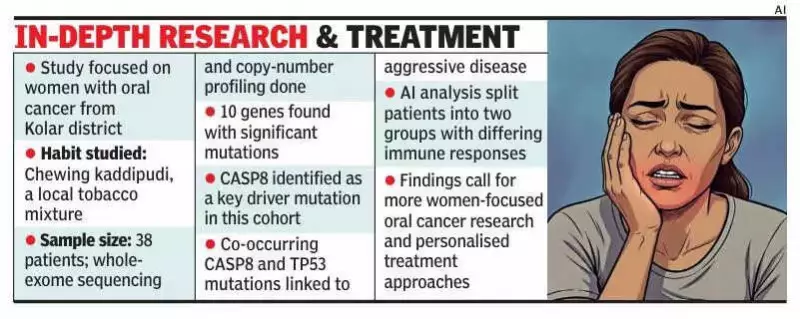
The research, spearheaded by Prof Tapas K Kundu of the Jawaharlal Nehru Centre for Advanced Scientific Research (JNCASR) in Bengaluru, marks a pivotal step. Conducted in collaboration with the National Institute of Biomedical Genomics and clinicians at Sri Devaraj Urs Academy of Higher Education and Research, the study delved into the genetic makeup of tumours in 38 women diagnosed with oral squamous cell carcinoma.
All participants were habitual users of 'kaddipudi,' a locally prevalent tobacco mixture. The team employed advanced techniques like whole-exome sequencing and copy-number analysis on tumour and blood samples. Their goal was clear: to understand the unique genetic alterations fuelling the disease in this specific demographic and to decipher why some tumours turn aggressive.

CASP8 Emerges as a Key Driver Mutation
The investigation, published in the journal Clinical and Translational Medicine, pinpointed ten genes with significant mutations. Among them, two genes—CASP8 and TP53—stood out. While both have been implicated in oral cancer research largely involving men, this study revealed a crucial difference.
In women chewing kaddipudi, the CASP8 gene appeared to be the primary driver mutation, suggesting a distinct pattern of tumour development compared to what has been previously observed. The study further warns that when mutations in CASP8 and TP53 co-occur, the disease may progress more rapidly and have a higher likelihood of recurrence.
AI Tools Reveal Treatment Pathways
Moving beyond genetics, the researchers utilised deep-learning algorithms to analyse digital images of the tumour tissues. This innovative approach uncovered two distinct groups of patients with different immune patterns within their tumours.
This discovery is not just academic; it has direct clinical implications. Identifying a patient's specific immune tumour environment can guide doctors in selecting the most effective therapies, moving towards a more personalised treatment strategy. The study underscores how such digital tools can become vital allies for clinicians in planning individualised care.
Implications for Future Research and Regional Health
Although the study's sample size is limited, its findings are profound. It highlights an urgent need for more women-focused cancer research in India and demonstrates how region-specific habits, like chewing kaddipudi, can fundamentally shape the biology of a disease.
The researchers emphasise that these patterns must be validated through larger, more extensive studies. Looking ahead, the team plans to investigate the precise mechanistic interplay between the CASP8 and TP53 genes. This future work aims to identify potential targets for new therapies and help develop screening methods tailored to regional risk factors.
Ultimately, this study provides a crucial starting point. It offers hope for personalised treatment strategies for a high-risk group—women with long-standing tobacco-chewing practices—who have remained in the shadows of oral cancer discourse for far too long.






