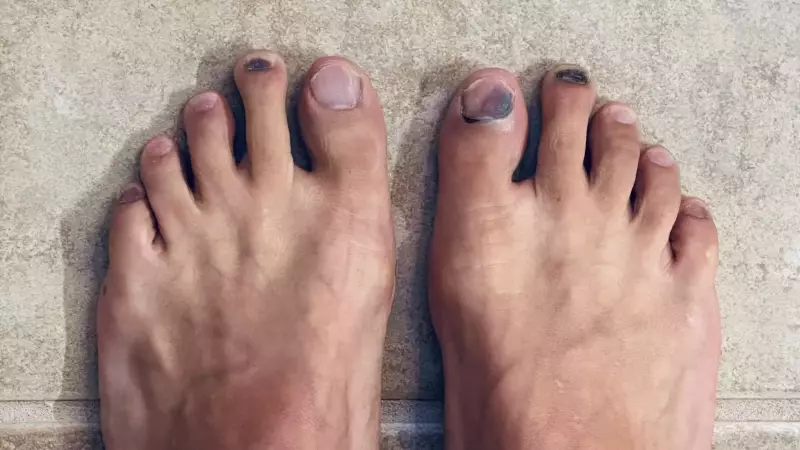
A common yet perplexing problem recently surfaced on an online forum: a user sought help for a stubborn patch of dried blood trapped under a toenail that had been there for a staggering seven months. This query, posted on Quora, highlights a frequent dilemma faced by many adults who notice long-lasting nail discolouration after minor, often forgotten, injuries.
Why Dried Blood Under Nails Refuses to Go Away
We consulted Dr Sunil Kumar Prabhu, Consultant – Dermatology at Aster RV Hospital, to decode this persistent issue. He identified the condition as a subungual hematoma, which occurs when blood pools beneath the nail plate following trauma.
"The injury isn't always a dramatic event," Dr Prabhu clarifies. "It can result from stubbing your toe or something heavy falling on it, but also from subtle, repetitive pressure like tight shoes, ill-fitting footwear, or extensive running and walking." Because these incidents are minor, people frequently fail to connect them to the subsequent nail change. "In many cases, patients do not recall any specific injury at all," he adds.

The primary reason for the discolouration's lengthy stay is the snail-paced growth of toenails. "Toenails grow very slowly, especially in adults. The trapped blood can remain visible for several months and only gradually moves forward as the nail grows out," explains Dr Prabhu. It's a natural, albeit slow, process of elimination.
Dried Blood vs. Fungus: Knowing the Difference
How can one be sure it's dried blood and not another condition like a fungal infection? The dermatologist points out distinct signs. "Dried blood usually appears reddish-brown to dark purple or black. A key characteristic is that it moves forward over time with the nail's growth," he states.
In contrast, "nail fungus typically presents with yellowing, thickening, brittleness, and debris under the nail." This clear clinical distinction helps in identifying the issue without confusion.
The Right and Wrong Way to Handle It After Months
When dealing with a seven-month-old subungual hematoma, Dr Prabhu issues a strong warning against DIY interventions. "It is not advisable to try removing dried blood from beneath the nail at home," he emphasises.
"Scraping, piercing, or cutting into the nail can lead to infections, further nail damage, delayed healing, and in some cases, permanent nail deformity." He adds that home remedies might increase pain or complicate the natural recovery process.
For most individuals, patience is the best medicine. "In the majority of cases, no active treatment is needed. The dried blood will gradually grow out with the nail," assures Dr Prabhu. Given that toenails can take 9 to 12 months or more to fully regenerate, this requires time.
Supporting natural healing involves simple measures: keeping the nail neatly trimmed, wearing comfortable and well-fitting footwear, and avoiding activities that cause repeated trauma to the toe.
However, professional help becomes necessary under specific circumstances. "If the nail becomes loose, painful, or is a cosmetic concern, a doctor may recommend partial nail trimming or removal under sterile conditions," notes Dr Prabhu. If the discolouration doesn't clear with time, treatment options may include medical nail trimming, partial/complete removal, or further tests to confirm the diagnosis.
Dr Prabhu concludes with crucial advice for prevention: "Identifying and addressing the underlying cause—whether it's repeated trauma, footwear issues, or a nail disorder—is essential to prevent recurrence."
Disclaimer: This article is based on information from the public domain and expert inputs. It is essential to consult your healthcare practitioner for personal medical advice.