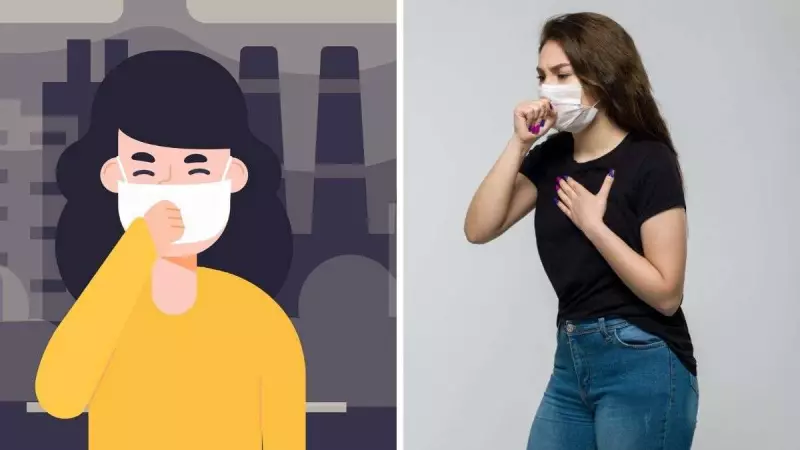
As dense smog blankets northern India, pushing the Air Quality Index (AQI) into the 'severe' category above 400, a silent and dangerous battle begins inside the human body. This is not just hazy weather; it's a public health emergency where every breath draws in a toxic cocktail of pollutants that wreak havoc on our most vital organ for breathing—the lungs.
The Microscopic Invasion: How Pollutants Attack Your Airways
When the AQI soars past 400, the concentration of fine particulate matter, especially PM2.5, reaches extremely hazardous levels. These particles are so minute—about 30 times finer than a human hair—that they bypass the body's natural defenses. Nose hairs and mucus in the upper airways, which typically trap larger dust and pollen, are completely ineffective against this microscopic assault.
Dr. Arvind Kumar, a renowned chest surgeon, explains the process vividly. These ultrafine particles travel deep into the bronchial tubes and finally embed themselves in the delicate air sacs, known as alveoli. This is where the crucial exchange of oxygen and carbon dioxide takes place. The presence of these toxic particles triggers an immediate inflammatory response as the body tries to fight off the foreign invaders.

The Body's Desperate Defense and Resulting Damage
The inflammation caused by the pollutants is the root of multiple health issues. The lining of the airways swells and narrows, making it difficult for air to pass through. This leads to the hallmark symptoms: wheezing, a feeling of tightness in the chest, breathlessness, and persistent coughing. The body also produces excess mucus in an attempt to trap and expel the particles, resulting in phlegm and congested lungs.
For individuals with pre-existing conditions like asthma, bronchitis, or Chronic Obstructive Pulmonary Disease (COPD), this reaction is swift and severe, often leading to acute attacks that require emergency medical care. However, the damage is not limited to those already sick. Even healthy individuals experience reduced lung function, increased fatigue, and a heightened risk of respiratory infections when exposed to such poor air quality for extended periods.
Long-Term Consequences: From Scarring to Cancer Risk
The danger of an AQI above 400 extends far beyond immediate discomfort. The continuous state of inflammation can cause irreversible scarring (fibrosis) of the lung tissue over time. This scarring stiffens the lungs, permanently reducing their capacity and efficiency. Dr. Kumar emphasizes that this polluted air is a slow poison, contributing directly to the development of chronic lung diseases, heart conditions, strokes, and even lung cancer.
Children are particularly vulnerable as their lungs are still developing, and they breathe more rapidly, inhaling more polluted air relative to their body weight. For the elderly and pregnant women, the stress on the body from fighting this pollution can lead to serious complications.
Doctors strongly advise taking stringent protective measures when the AQI is in the 'severe' zone:
- Minimize all outdoor activities, especially strenuous exercise like running or cycling.
- Wear a well-fitted N95 or N99 mask consistently when stepping outside.
- Use high-quality air purifiers with HEPA filters indoors.
- Keep doors and windows closed to prevent polluted air from entering homes and offices.
- Stay hydrated to help the body flush out toxins.
The situation underscores that air pollution is no longer just an environmental issue but a critical medical threat. Understanding the precise physiological damage caused by an AQI of 400+ is the first step toward recognizing the urgency of both personal protection and collective action for cleaner air.