RG Kar Hospital Emergency Crisis Deepens After Recent Deaths
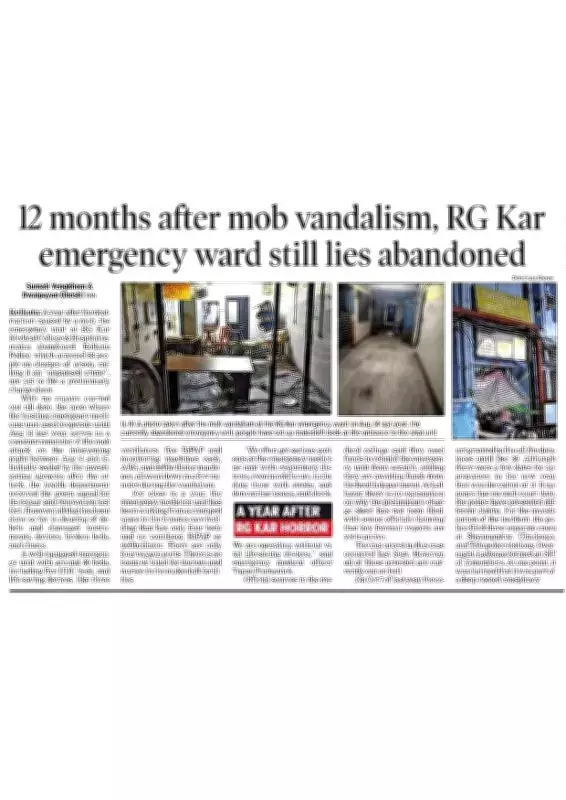
The recent deaths of two patients at the emergency department of Kolkata's RG Kar Medical College Hospital have reignited serious concerns about the hospital's emergency care capabilities. This tragic development has brought renewed attention to the hospital's original, well-equipped emergency unit that was destroyed by a mob during the RG Kar movement on August 14, 2024, and remains closed to this day.
Doctors Demand Return to Original Emergency Unit
On Monday, emergency department doctors met with the college principal, urgently requesting that emergency services be shifted back to their original location. Despite receiving clearance from investigating agencies approximately eighteen months ago, the original unit remains sealed and non-operational. The destruction of this facility forced hospital administration to relocate emergency services to a cramped ground-floor space in the Trauma Care building that lacks essential equipment and basic patient amenities.
"We have been consistently highlighting the severe infrastructure deficiencies, lack of patient facilities, and extreme space constraints in this temporary emergency setup," stated emergency medical officer Tapas Pramanick. "The hospital has informed Swasthya Bhawan about the urgent need to relocate, but we have yet to receive approval. Patient care issues will continue to escalate if we remain in this inadequate space."

Critical Infrastructure Deficiencies in Current Setup
The current emergency arrangement presents multiple critical challenges for both patients and medical staff:
- Severe space limitations with only six beds compared to the original unit's approximately forty beds
- Complete absence of life-saving equipment including ventilators and bipap machines
- Inadequate oxygen supply with doctors dependent on just six oxygen ports for patients with acute breathing difficulties
- Critical washroom shortage where only one staff toilet functions for both male and female staff
The patient washroom situation has become particularly problematic. While two toilets exist, one has been closed for over a year due to leaks that damaged a LINAC machine in the basement radiotherapy unit. This leaves emergency patients without dedicated restroom facilities.
Original Unit's Capabilities Versus Current Limitations
The contrast between the original emergency unit and the current temporary arrangement is stark and alarming. The vandalized original facility featured:
- Approximately 40 beds including five High Dependency Unit (HDU) beds
- Advanced life-saving equipment including three ventilators, five bipap machines, five monitor machines, ABG machines, and defibrillators
- Dedicated rooms for doctors and nurses
- A blood collection center and CPR room
- At least three patient washrooms
Medical professionals emphasize that the current facility is fundamentally unsuitable for providing comprehensive emergency medical services, potentially compromising patient outcomes.
Funding Challenges and Political Intervention
Hospital officials have identified funding as the primary obstacle to restoring the original emergency unit. "We require substantial funds to completely rebuild the emergency department from scratch," explained a medical college official. "We are awaiting necessary allocations from the health department to initiate this critical reconstruction."
The situation has drawn political attention, with Trinamool MLA Atin Ghosh, who serves on the RG Kar Rogi Kalyan Samiti, meeting with the college principal on Monday. "The hospital awaits Swasthya Bhawan's permission to reopen the original emergency unit," Ghosh stated. "I will escalate this matter to the highest authorities to ensure funds are allocated for essential equipment. The current makeshift arrangement lacks both infrastructure and basic patient facilities, creating unacceptable conditions for emergency care."

This ongoing crisis at one of Kolkata's major medical institutions highlights systemic challenges in healthcare infrastructure maintenance and emergency preparedness, with patient safety hanging in the balance as bureaucratic processes delay vital reconstruction efforts.