

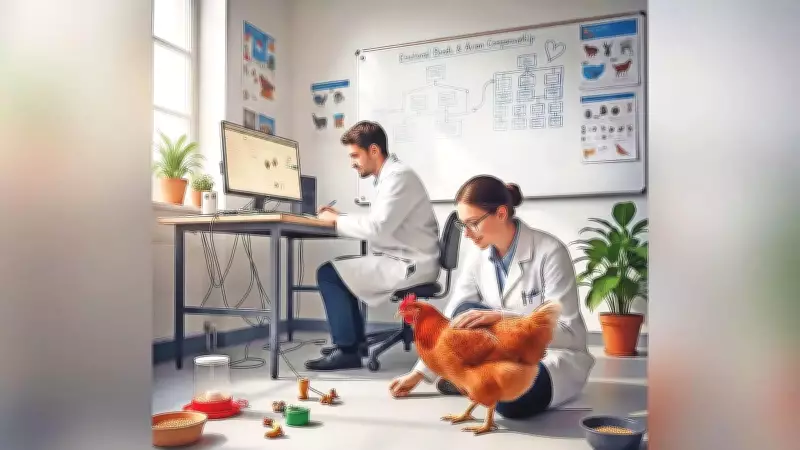
Professor Embraces Feathered Therapy with Emotional Support Chicken
A Canadian psychology professor specializing in the emotional benefits of pets has brought her academic work into her personal life in an unconventional way. Instead of a traditional dog or cat, she has chosen an emotional support chicken named Saturday as her companion.
Therapy Comes with Feathers and Understanding
Sonia Kong, who teaches at the University of Northern British Columbia, adopted the 11-month-old bird from a farm near Prince George. The adoption happened on a Saturday, inspiring the chicken's name. Kong describes a deep emotional connection with her feathered friend.
"I feel like she's so smart. She can understand my emotions," Kong told CBC. "When I was sad, she just lay there, looking at me, trying to figure out what was going on, 'Why are you crying?' That means a lot to me."

Saturday isn't confined to the home either. Kong has created a custom diaper for the chicken, allowing her to accompany Kong around town—demonstrating that emotional support can indeed come with wings.
Research That Clucks: Studying Pets and Adolescent Development
Kong is currently conducting research on how pets influence the social and emotional development of teenagers through an international online survey. Her work examines cultural dimensions of human-animal relationships.
"We want to see whether there are cultural differences and how spending time with pets may influence adolescents in different cultural backgrounds," she explained.
This research has personal resonance for Kong, whose own family illustrates cultural differences in pet perception. Her parents have jokingly asked if she plans to eat Saturday.
"It's like 'I will not! She's a pet.' They're kidding but there are cultural differences or cultural value differences," Kong noted, highlighting how her personal experience informs her academic inquiry.
Blending Personal Experience with Academic Inquiry
Kong's approach represents a unique intersection of personal therapy and scientific research. Her emotional support chicken serves both as a companion and as a living case study in human-animal bonding.
The professor's work explores several important dimensions:
- The emotional intelligence animals display in responding to human emotions
- How cultural backgrounds shape attitudes toward different types of pets
- The therapeutic benefits of unconventional animal companions
- The integration of personal experience into academic research methodologies
For Kong, the science is deeply personal. Sometimes, the most effective therapy doesn't require formal training or clinical settings—it simply requires a compassionate presence that sits beside you and clucks softly, offering quiet companionship and emotional support.






