

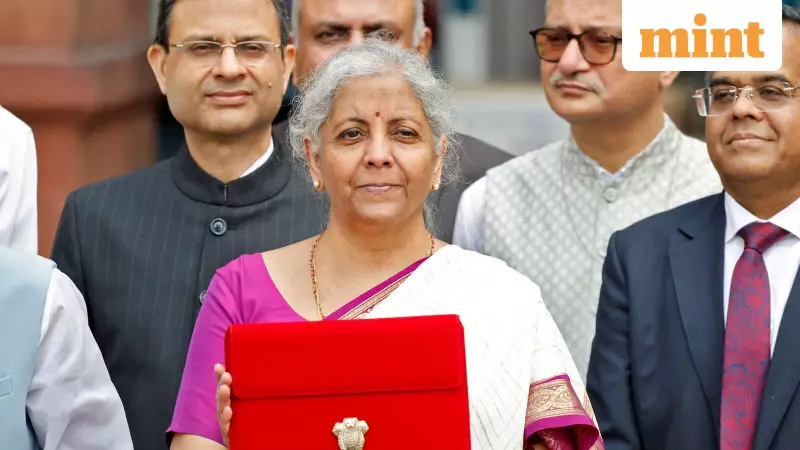
Healthcare Sector Awaits Budget 2026 with High Expectations
The Indian government will present the Union Budget 2026 on February 1. The healthcare sector now hopes for a significant rise in government spending. Experts want public investment in healthcare to reach 2.5% to 3% of GDP. This marks a substantial increase from the current level of about 1.3%.
Long-Standing Demand for Higher Allocation
Tushar Badjate, Director of Badjate Stock & Shares Pvt Ltd, shares his views. He says India's healthcare expenditure remains below 2.5% of GDP. This leaves little room for complacency in the upcoming budget. The National Health Policy 2017 set a target to raise public investment to 2.5% of GDP by 2025. The government has not met this goal. Many analysts believe this failure contributes to the country's weak health infrastructure.
Healthcare analysts also predict a stronger focus on preventive care and mental health. They expect more support for medical technology. These expectations come despite medical inflation rates ranging from 11.5% to 14%.

"This budget should focus on higher public health allocation, preventive care, and capacity building," said Badjate. "Policy support for pharma and medical devices, along with tax relief on health insurance, could improve access and strengthen the sector's long-term growth."
Transformative Policy Developments Set the Stage
Nitant Darekar, Research Analyst at Bonanza, points to recent policy changes. The Sabka Bima Sabki Raksha Bill allows 100% FDI in insurance. The government also removed GST on premiums. Following these developments, the healthcare sector anticipates substantial budget allocations in 2025.
Five Key Areas to Watch in Healthcare
PLI Schemes
Suresh Garg, Founder and CMD of Zeon Lifesciences, speaks about PLI schemes. He suggests broadening these schemes for nutraceuticals. Adjusting GST on raw materials like botanical extracts would help. Aligning FSSAI approvals with global norms will promote domestic manufacturing and exports.
Garg believes improved credit guarantees, similar to ECLGS extensions, are necessary. Combined with R&D tax credits for advances in probiotics and gut health, these measures will enable MSMEs to automate. They can then explore markets in the Middle East and Southeast Asia. This could make nutraceuticals a fundamental part of Viksit Bharat by 2047.
Public Medical Infrastructure
Aman Puri, Founder of Steadfast Nutrition, highlights infrastructure gaps. He states that additional investments are crucial to address shortcomings in public medical infrastructure. More financial support should go to developing and maintaining primary and secondary healthcare facilities. This is especially important in rural regions and Tier 2 and Tier 3 cities.
These areas house low-income groups and represent 65% of India's population. Currently, the private sector provides most hospital capacity in these cities. This makes healthcare more costly and less accessible for local communities. A significant shortage of healthcare professionals also exists across the country.
Preventive Healthcare
Life expectancy has increased in India. However, healthy life expectancy remains inadequate and unequal. The current system emphasizes treating illnesses. Preventive healthcare deserves equal consideration.
Aman Puri points to a less visible crisis involving non-communicable diseases. Diabetes, hypertension, and cardiovascular diseases are spreading within the country. To tackle these issues before they escalate, more investment is crucial. Puri advises funding awareness campaigns, nutrition guidance programs, early detection efforts, disease surveillance, screenings, and management strategies.
Nitant Darekar of Bonanza adds that the budget should prioritize developing remaining health and wellness centres. The government projected 157,000 such centres. A greater emphasis on preventative care infrastructure is essential.
Medical Devices Manufacturing & Telemedicine Infrastructure

Experts call for increased allocations toward medical devices manufacturing under "Make in India." This would reduce import dependency. Nitant Darekar also anticipates announcements on universal health coverage timelines. He expects tax incentives for health insurance enrolment. Strategic investment in telemedicine infrastructure could improve healthcare access in underserved communities.
Ayushman Bharat Coverage
According to Nitant Darekar, the government plans to expand Ayushman Bharat coverage. It may boost the insured amount from ₹5 lakh to ₹10 lakh per household. This move would extend benefits beyond the present framework.
Disclaimer: The views and recommendations above are those of individual analysts or broking companies, and not of Mint. Investors should consult certified experts before making any investment decisions.





