

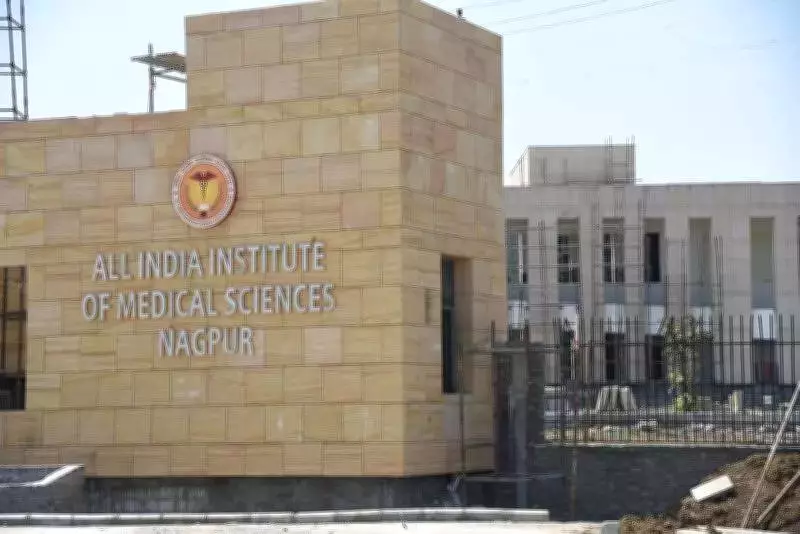
Bombay High Court Expresses Strong Displeasure Over Faculty Vacancies at AIIMS Nagpur
The Nagpur bench of the Bombay High Court last week voiced significant concern and displeasure regarding the extensive vacancies in the faculty positions at the All India Institute of Medical Sciences (AIIMS) in Nagpur. The court went so far as to remark that the condition of the prestigious institute was "worse than government hospitals", highlighting a critical issue in India's healthcare infrastructure.
Court Acts on RTI-Based Report Revealing 137 Vacant Posts
The court's intervention was prompted by a report published by The Times of India on January 2, which was based on information obtained under the Right to Information (RTI) Act. This report disclosed that out of 373 sanctioned faculty posts at AIIMS Nagpur, a staggering 137 positions were lying vacant. This translates to approximately 36.7% of the total faculty strength being unfilled, raising serious questions about the institute's operational capacity.
The data further indicated similar shortages across several other AIIMS institutions nationwide, but the court emphasized that this could not justify the situation in Nagpur. "It cannot be defended by saying others are worse," the bench asserted, directing that a comprehensive report on the vacant posts be formally recorded.

Judicial Bench and Legal Proceedings
Hearing the matter, a division bench comprising Justice Anil Kilor and Justice Raj Wakode took serious note of the vacancies. Senior advocate Jugalkishore Gilda, appointed as amicus curiae in the case, was assisted by advocate Shaunak Kothekar. During the proceedings, counsel for AIIMS, Mugdha Chandurkar, argued that compared to other AIIMS units across India, the Nagpur branch had filled a significant number of posts and that vacancies were relatively fewer.
However, the bench recorded its dissatisfaction with this explanation, underscoring that mere comparisons were insufficient. The court directed the Central government counsel to personally visit the institute and submit a detailed status report on the prevailing conditions, ensuring a firsthand assessment of the issues.
Impact on Healthcare and Medical Education
The court made poignant observations about the purpose of such institutions, stating, "Only inaugurating an institution with grandeur is not enough. Running it properly is more challenging and essential." It added that hospitals like AIIMS are established to provide medical services to poor patients, and "they must be taken care of".
Experts have pointed out that the shortage of faculty adversely affects multiple areas:
- Patient care and treatment quality
- Surgical procedures and outcomes
- Intensive care services
- Medical education and training of future doctors
Challenges in Recruitment and Retention
The AIIMS counsel informed the court that repeated advertisements had been issued to fill the positions, but several posts received no applications. In some instances, candidates applied but did not appear for interviews, while in others, selected candidates either did not join or resigned later. A key factor cited was the higher-paying opportunities available in the private market, which reduce doctors' willingness to serve at the institute.
The bench has sought a comprehensive report on these vacancies and adjourned the matter for further hearing, indicating that this issue requires urgent and sustained attention to uphold the standards of medical education and healthcare in the region.






