

AIIMS Bhopal Grapples with Severe Faculty Shortage Crisis
While long patient queues are a common sight at AIIMS Bhopal, the overflowing waiting halls now reveal a deeper, systemic issue that has been festering at one of the city's premier healthcare institutions. This problem has now reached a critical stage, severely impacting both patient care and medical education.
Alarming Faculty Vacancies Exposed by Health Ministry Data
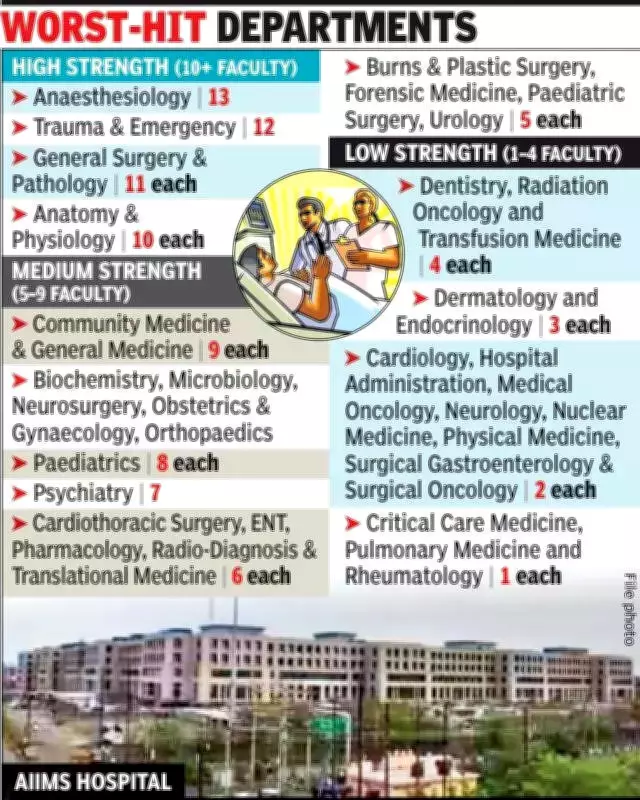
Recent data shared by the Union Ministry of Health and Family Welfare has uncovered a troubling reality at AIIMS Bhopal. Several super-specialty departments are currently operating with just a single faculty member, creating immense pressure on both patients and the remaining medical staff.
The situation is particularly dire in departments such as Cardiology, Neurology, Rheumatology, and Clinical Immunology, where only one senior doctor is available to handle all consultations. This severe staffing shortage forces patients to wait for hours, with many being asked to return on different days due to the overwhelming patient load.

Nearly One-Quarter of Faculty Positions Remain Vacant
The Union health ministry report reveals an even more concerning statistic: approximately 23% of sanctioned faculty posts are currently vacant at AIIMS Bhopal. Out of 312 sanctioned positions, 71 remain unfilled, leaving the hospital struggling to manage its substantial patient volume effectively.
This faculty crisis extends beyond just super-specialty departments. Clinical branches including General Surgery, Orthopaedics, and Paediatrics are also operating with stretched resources. Even basic science departments such as Anatomy, Biochemistry, and Pharmacology report vacancies, though the shortfall is less severe compared to high-demand clinical areas.
Critical Departments Operating with Contractual Leadership
A review of the current staffing situation shows that many specialized branches continue to rely on additional professors or contractual appointees rather than full-time senior faculty. This temporary arrangement underscores the severe strain on healthcare services at the institution.
Departments where the Head of Department (HoD) position is held by contractual or additional staff include:
- Cardiology
- Neurology
- Rheumatology
- Clinical Immunology
- Surgical Gastroenterology
- Surgical Oncology
- Translational Medicine
- Radiation Oncology
Impact on Patient Care and Medical Education
The uneven staffing distribution continues to negatively affect both patient services and postgraduate medical training. Super-specialty departments such as Cardiology, Neurology, Nephrology, and Endocrinology are among the hardest hit, with patients often waiting hours for consultations or being asked to return multiple times for appointments.
This staffing imbalance highlights the urgent need for accelerated recruitment drives. An official familiar with the situation noted that this reflects a wider trend across newer AIIMS institutions, where recruitment of super-specialists has consistently lagged behind sanctioned posts. In some instances, doctors have moved to the private sector or other institutions, exacerbating the shortage.
Administrative Efforts and Continuing Challenges
In the recent past, the institute's governing body directed the hospital administration to reduce waiting times and improve service efficiency. However, despite these directives, significant gaps in staffing and service delivery persist.
The shortage is most acute in departments that depend heavily on senior specialists, affecting both the quality of patient care and the training of future medical professionals. The reliance on contractual staff and additional professors rather than permanent faculty members continues to strain the institution's ability to provide timely and comprehensive healthcare services.






