Russia's Zakharova Mocks Trump As Iran Targets US Bases In Gulf; 'They Bring Trouble Not Security'
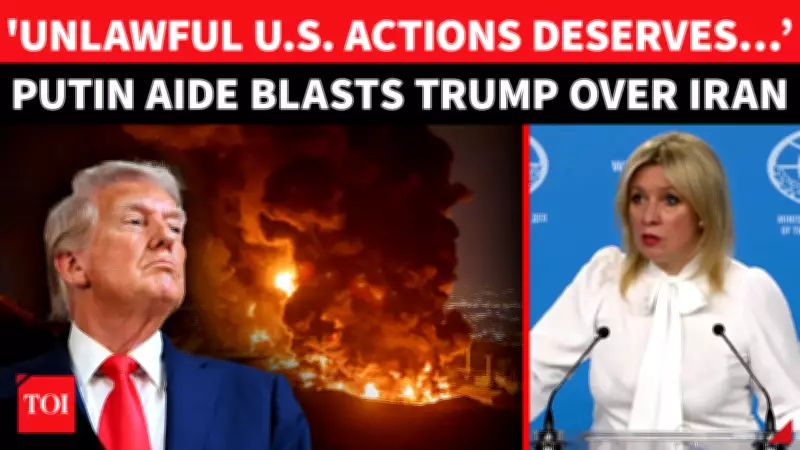
Russian Foreign Ministry spokesperson Maria Zakharova has unleashed a blistering critique against the United States, directly accusing Washington of flouting international law and dangerously escalating tensions across West Asia through its recent maneuvers around the strategic Strait of Hormuz. In a pointed verbal assault, Zakharova framed the alleged U.S. blockade as a prime example of what she termed an "arbitrary interpretation" of established global legal norms.
Warning of Deepening Conflict and Economic Fallout
Zakharova issued a stark warning that such unilateral actions by the United States risk plunging the region into a deeper, more protracted conflict. She emphasized that the potential for triggering serious economic repercussions is alarmingly high. The spokesperson specifically targeted U.S. military rhetoric, expressing grave concerns over what she described as the dismissal of fundamental rules of warfare as "nonsense."
"This raises profound questions about accountability and the genuine adherence to international humanitarian law," Zakharova stated, underscoring the gravity of the situation.

Global Stakes and Energy Supply Disruptions
Highlighting the immense global stakes involved, Zakharova stressed that disruptions in the Strait of Hormuz—a vital energy corridor for the world—have already unleashed massive consequences. According to her detailed assessment, over a month of halted shipping, attributed to U.S. and Israeli actions targeting Iran, has resulted in a severe cutoff of critical global supplies.
The spokesperson provided startling figures to illustrate the scale of the impact:
- Nearly 20% of the global oil supply has been severed.
- More than 30% of global liquefied natural gas (LNG) exports have been disrupted.
- A staggering 40% of global helium exports have been cut off.
Zakharova's comments come amid heightened regional tensions, with Iran reportedly targeting U.S. bases in the Gulf. Her remarks implicitly mock the U.S. posture under the Trump administration, suggesting that American actions bring instability rather than the promised security. The broader context includes a complex web of regional confrontations and international diplomacy, positioning Russia as a vocal critic of U.S. foreign policy in this volatile theater.