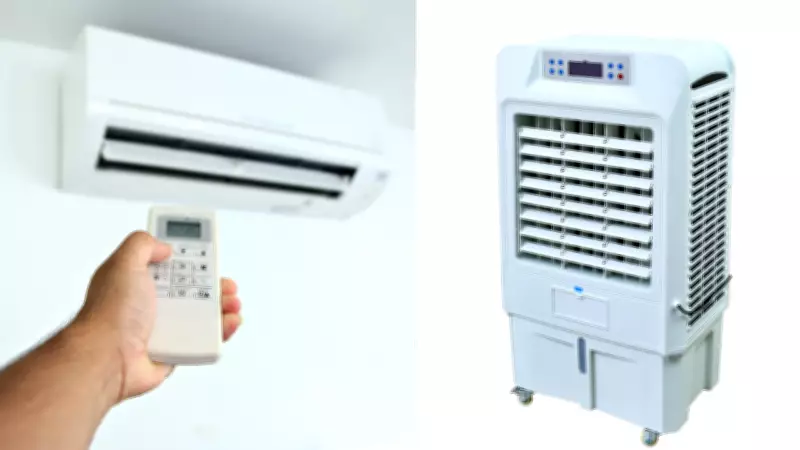
Step into a Delhi summer and the heat feels personal. By May and June, temperatures often cross 45°C, and the question comes up in every household: should it be an air conditioner or an air cooler this year? The answer isn't fixed. It depends on the kind of heat outside, the air inside your room, your budget, and even your skin.
As Dr BL Jangid, Dermatologist and Founder of SkinQure Clinic in Delhi, explains, “There is no single, correct answer to the air cooling debate. Which option is better will vary on skin type and environmental conditions.” That line sums up Delhi’s dilemma quite well.
Delhi’s Heat: Dry, Dusty, Then Suddenly Humid
Delhi doesn’t have one kind of summer. It shifts. Early summer is dry and harsh, with hot winds known as loo. By late June and July, humidity rises as the monsoon approaches. This shift changes how cooling devices perform.

Studies by the Bureau of Energy Efficiency show that cooling needs vary with humidity and airflow. Evaporative cooling (what air coolers use) works best in dry heat. Air conditioning, on the other hand, handles both heat and humidity by removing moisture from the air. This is why a cooler may feel perfect in May but struggle during sticky July nights.
Air Conditioners: Relief With a Hidden Cost
Air conditioners offer fast and controlled cooling. They bring down room temperature within minutes and keep it steady, even during peak afternoon heat. For people working from home or elderly family members, that consistency matters.
But there’s a trade-off. ACs pull moisture out of the air. Dr Jangid explains it clearly: “Air conditioners cool skin by reducing sweating. This reduces symptoms of heat rash and prickly heat. However, prolonged exposure can strip away skin’s natural moisture, which can lead to dryness and irritation.”
Long hours in AC rooms can lead to dry skin, chapped lips, and sometimes itchy eyes. That’s why dermatologists suggest a simple routine: drink more water, use a light moisturiser, and avoid sitting directly under cold air for long stretches. Energy use is another factor. According to the Bureau of Energy Efficiency, air conditioners consume significantly more electricity than coolers, which reflects in higher power bills during peak summer.
Air Coolers: Budget-Friendly but Weather-Dependent
Air coolers have always been part of Delhi homes. They are affordable, easy to move, and cost far less to run. They also bring in fresh air, unlike ACs that circulate indoor air. Their biggest strength lies in dry heat. Coolers work by evaporating water, which lowers air temperature naturally. This makes the air feel less harsh on the skin.
Dr Jangid notes, “Air coolers increase humidity in the room by adding moisture in the air. This may feel more natural with less skin dryness as compared to air conditioners.” But that same moisture can turn into a problem. He adds, “The increased humidity can increase fungal and bacterial skin infections as well as acne, especially for people who sweat a lot.”
There’s also a practical limitation. When humidity rises, coolers lose efficiency. On those heavy, sticky nights, they may only push warm, damp air around the room.
Skin, Comfort, and the Delhi Lifestyle
Cooling isn’t just about temperature. It’s also about how the body responds. In AC environments, the body sweats less, which reduces heat rashes. But the lack of moisture can dry out the skin barrier. In cooler environments, the air feels softer, but excess humidity can clog pores and trigger breakouts.
So What Works Better?
It depends on daily habits. Someone who spends most of the day outdoors might prefer an AC at night for quick relief. Someone who values airflow and lower electricity costs may lean toward a cooler, especially in dry weather. Dr Jangid suggests balance rather than extremes. “Both air conditioners and air coolers can be used effectively. Though, air coolers might not be effective in extreme humid conditions.”
Making the Right Choice This Summer
Delhi homes often find a middle path. Many families use coolers in the early summer months and switch to ACs when humidity rises. Some even combine both, using a cooler during the day and AC at night.

Beyond the machine, daily habits matter just as much. Simple steps can reduce heat stress and skin issues:
- Regular baths to remove sweat and dust
- Loose cotton clothing that allows the skin to breathe
- Constant hydration through the day
- Basic skincare to protect against dryness or infections