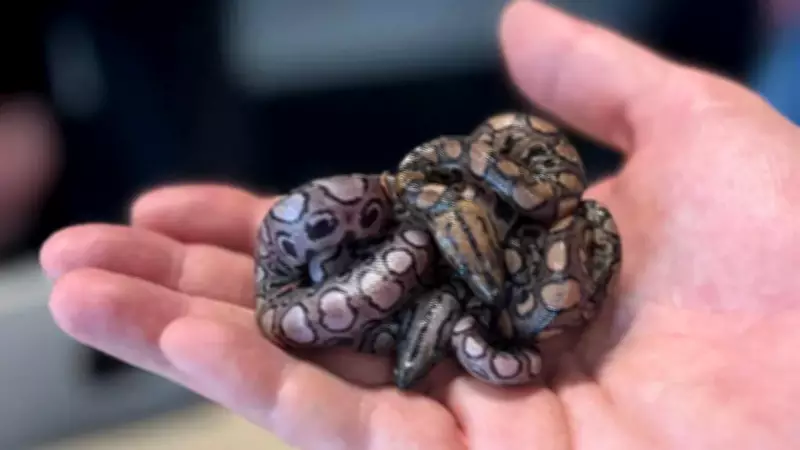
Snake Named Ronaldo's Second Virgin Birth Stuns Scientists in Rare Case
The natural world never ceases to amaze, and a recent event involving a snake named Ronaldo has captivated the scientific community once again. In a remarkable occurrence, a 14-year-old Brazilian rainbow boa constrictor at the City of Portsmouth College gave birth on Monday, despite having no contact with a male snake. This incident is particularly astonishing because it is not the first time this snake has reproduced in such a manner.
What is Parthenogenesis: The Science Behind Virgin Births
According to the Biological Journal of the Linnean Society, parthenogenesis is a form of asexual reproduction where an embryo develops from an unfertilized egg cell. Essentially, the female snake reproduces without any male involvement. This process occurs when a polar cell, formed during egg cell development, acts as a substitute for sperm to fertilize the egg.
The offspring resulting from parthenogenesis carry only the genetic material of the mother snake. They are not exact clones but are highly similar to her. This reproductive method has been observed in various snake species, including boas, pythons, and pit vipers.

Ronaldo the Snake: A Rare Second Virgin Birth
What makes Ronaldo's case especially intriguing is the repetition. The animal management centre at City of Portsmouth College reported to UPI that this Brazilian rainbow boa constrictor, part of the college's collection, has now experienced multiple virgin births, with the most recent one closely resembling the event from two years ago.
Such repeated instances are extremely rare and hold significant scientific importance. They suggest that parthenogenesis is not merely an isolated anomaly but could be a replicable reproductive strategy in certain species. A study has identified consecutive virgin births among boa constrictors, validating the phenomenon scientifically, even though it remains uncommon.
How Common is Parthenogenesis in Snakes?
For many years, virgin births were thought to be exceedingly rare. However, recent research indicates they might be more frequent than previously believed. A study in the Biological Journal of the Linnean Society reveals that facultative parthenogenesis—where animals that typically reproduce sexually switch to asexual reproduction—appears to be quite common among snakes.
Dr. Warren Booth, a leading expert in this field, has noted: "Once considered an evolutionary novelty, facultative parthenogenesis has now been documented in an increasing number of vertebrate species... however, it is snakes that offer the greatest insight into this unusual reproductive trait."
Why Do Snakes Reproduce Without Mates?
The exact causes of parthenogenesis remain unclear. Initially, scientists hypothesized it occurred only in the absence of males, but recent findings show it can happen even when males are present. Potential factors driving this phenomenon include:
- A survival mechanism in isolated environments
- Natural genetic or cellular abnormalities
- Environmental and physiological stress factors
As researchers explain, the precise triggers are still unknown, making cases like Ronaldo's crucial for advancing scientific understanding.
Implications for Evolutionary Science
The repeated virgin births of Ronaldo at City of Portsmouth College highlight the incredible plasticity of life. These events challenge conventional views on reproduction and suggest that some organisms have evolved alternative strategies to ensure survival.
While such cases have limitations, they are invaluable for studies in genetics, reproduction, and evolutionary biology. As more scientists investigate rare virgin births, each instance, like that of Ronaldo the boa, contributes to our knowledge of the natural world and reminds us of the many mysteries still to be unraveled about life's complexities.