

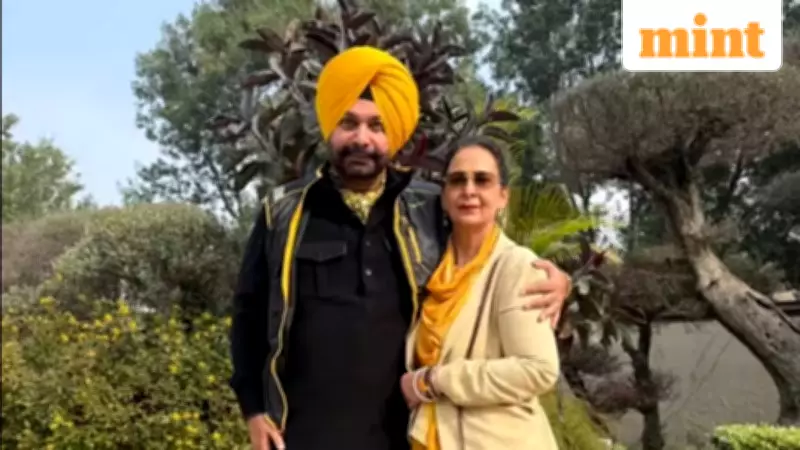
Navjot Kaur Sidhu's Cancer Recovery Comments Trigger Medical Debate
Navjot Kaur Sidhu, the prominent politician and wife of former cricketer-turned-politician Navjot Singh Sidhu, has become embroiled in a significant medical controversy following the viral circulation of a video featuring her personal health journey. The clip, which gained widespread attention on January 31, shows Sidhu discussing her recovery from stage 4 breast cancer and attributing part of her healing to unconventional practices alongside standard medical treatment.
Viral Video Details and Contentious Claims
In the controversial footage, originally posted on Instagram by religious preacher Acharya Aniruddhacharya, Sidhu openly shares details about her cancer treatment experience. She specifically mentions that dietary modifications and regular consumption of cow urine, known traditionally as gomutra, played a supportive role in her recovery process. The video further reveals that during her illness, she not only consumed cow urine but also incorporated it into bathing rituals as part of her holistic approach to wellness.
The video quickly spread across various social media platforms, attracting millions of views and generating intense discussion among medical professionals and the general public alike. Sidhu, who was diagnosed with advanced breast cancer several years ago, has been publicly transparent about her health struggles and recovery journey, making her statements particularly influential among followers and cancer patients.

Medical Community's Strong Reaction
The claims made in the video prompted immediate and forceful responses from healthcare experts across India. Numerous doctors and oncology specialists expressed serious concerns about the potential dangers of promoting unverified alternative treatments for life-threatening conditions like cancer.
Dr. Shishir Shetty, Director of Surgical Oncology at Fortis Hiranandani Hospital in Navi Mumbai, provided particularly strong criticism of the statements. "Such narratives are scientifically incorrect and potentially dangerous," he emphasized during an interview. "They can create false hope among vulnerable patients and may encourage people to delay or abandon proven medical treatments, which could have fatal consequences."
Medical professionals uniformly cautioned that while patients might choose to incorporate traditional practices alongside evidence-based treatments, public figures have a responsibility to avoid presenting anecdotal experiences as medical advice. The consensus among experts was clear: no scientific evidence supports the use of cow urine as a treatment for cancer, and such claims could mislead patients seeking effective care.
Sidhu's Clarification and Stance on Modern Medicine
Following the substantial backlash and concerns about potential medical misinformation, Navjot Kaur Sidhu issued a detailed clarification on February 3 through posts on both X (formerly Twitter) and Instagram. Her response aimed to contextualize her earlier statements and clarify her position on cancer treatment.
"Please watch the full video. Allopathic treatment is the only cure for cancer," she wrote emphatically. "This was just one second from a half-hour discussion on supportive therapies. Treatment should always be inclusive. Without lifestyle and dietary changes, healing becomes difficult. However, the primary treatment must always be decided by an oncologist. Half knowledge is dangerous."
In her more extensive Instagram clarification, Sidhu provided additional context about her personal experience. "Only allopathic treatment by a cancer specialist can save a cancer patient," she stated unequivocally. "Alternative practices such as lifestyle changes, organic food, and other supportive therapies can never cure cancer on their own. Surgery, chemotherapy and radiation saved my life. Diet and lifestyle changes helped me recover faster and prevent recurrence."
She specifically credited her oncologist, Dr. Rupinder Batra, for guiding her through the evidence-based medical treatment that she acknowledges as life-saving. This clarification positioned her earlier comments about cow urine as referring to supplementary practices rather than primary treatment methods.

Broader Implications and Expert Warnings
The controversy has highlighted several important issues in healthcare communication and patient education. Dr. Shetty elaborated on the particular vulnerability of cancer patients, noting that "people battling cancer are often vulnerable and looking for miracles. Influential voices should avoid presenting unproven remedies in a way that could be misunderstood."
Medical experts emphasized that while complementary approaches might provide psychological comfort or general wellness benefits, they should never be presented as alternatives to scientifically validated cancer treatments. The incident has sparked conversations about:
- The responsibility of public figures when discussing medical matters
- The importance of evidence-based medicine in serious health conditions
- The potential harm of anecdotal health claims circulating on social media
- The need for clear communication between healthcare providers and patients about treatment options
The episode serves as a reminder of the complex relationship between traditional practices, modern medicine, and public health communication in contemporary India. While personal health journeys can inspire others, medical professionals stress that treatment decisions should always be based on scientific evidence and guided by qualified healthcare providers rather than viral social media content or celebrity endorsements of unproven remedies.





