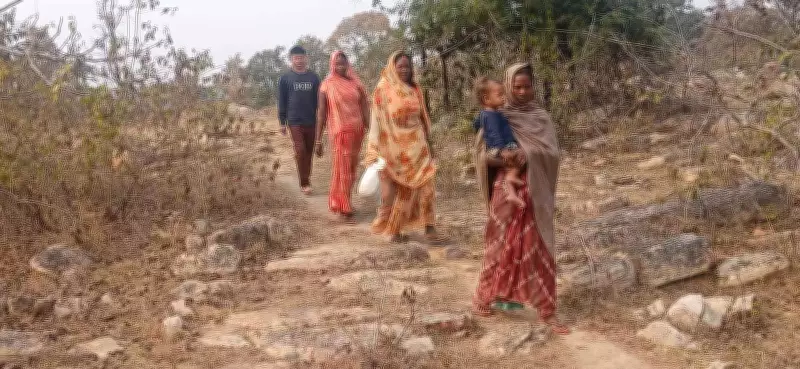
Pregnancy Forces Migration in Kaimur's Remote Villages Due to Lack of Roads and Healthcare
In the remote, hilly villages of Adhaura block in Kaimur district, Bihar, pregnancy often forces a distressing migration. With no proper motorable roads and difficult terrain cutting off access to essential healthcare, women in advanced stages of pregnancy are compelled to leave their homes and move to the plains weeks before their expected delivery date.
Inaccessible Healthcare and Risky Journeys
They either take houses on rent or stay at their relatives’ houses, if available, in plain areas. The nearest primary health centre (PHC) is located at the Adhaura block headquarters, but for many villagers, reaching the place involves negotiating a steep and treacherous hilly stretch of nearly 6 to 9 kilometers. For pregnant women, especially in the advanced stages, this journey becomes not just difficult but potentially life-threatening, so they shift to plain areas for delivery as a safer alternative.
Last year records of the local health department reveal that barely 50% of registered pregnant women were able to reach the Adhaura PHC for delivery. PHC in charge, Dr Chandan Singh, explained that women from villages with relatively better connectivity often prefer going to the Bhagwanpur PHC or even hospitals across the border in Uttar Pradesh. He admitted that the situation worsens during the monsoon season, when the ‘kachchi morum’ roads are washed away, making routine check-ups extremely difficult and hazardous.

Financial Burden and Prolonged Displacement
Due to these challenging conditions, many women in their seventh or eighth month of pregnancy migrate to the district headquarters at Bhabua, where they take houses on rent or stay with their relatives until delivery. Families usually accompany them, as at least a male and a female are required with the expectant mother throughout this period. This prolonged displacement significantly increases the financial burden on already poor households, adding to their struggles.
In January alone, 107 pregnant women were registered for monthly check-ups at the Adhaura PHC, highlighting the scale of the issue. The ranger of Adhaura, P N Singh, mentioned that the state government allotted funds with a list of villages for the repair and construction of ‘morum roads’. However, the area falls under a sanctuary zone, so the environment, forest and climate change department maintains the roads in the hilly area, which can complicate and delay improvements.
Personal Stories and Systemic Failures
Savitri Devi of Bhadawan Kala village has been living in a rented room in Bhabua for the past 20 days. She said walking 6 kilometers through hilly terrain to reach a hospital was impossible, so relocation was the only viable option. Sunita Devi from the same village shared a similar experience, emphasizing the lack of choices. Sijanti Devi of Kadahar village, which is surrounded by hills and lacks any road access, shifted to Adhaura for her delivery, illustrating the widespread nature of this problem.
An ambulance driver attached to the local PHC admitted that emergency calls from hilly villages are often avoided, as vehicles frequently get stuck among stones and uneven terrain, posing serious risks to both patients and medical staff. This reluctance further exacerbates the healthcare crisis in these remote areas.
Broader Context of Neglect
Villagers recalled that a former MLA, Ramchandra Yadav, had once promised during election campaigns that he would not marry until roads were constructed in these villages. While the promise remained unfulfilled, he eventually married, leaving residents disillusioned and highlighting the political neglect faced by these communities.
Despite 77 years of Independence, many of Adhaura’s 108 villages, having a population of over 70,000, still lack basic facilities such as roads, electricity, and drinking water. During summer months, families migrate with their cattle to the plains, settling near rivers and ponds until the monsoon arrives, showing that migration is a recurring theme driven by multiple factors beyond just healthcare.