Kolkata Health Alert: Fresh Date Palm Sap Poses Nipah Virus Risk
Health experts in Kolkata are issuing a strong warning to residents. They advise avoiding fresh date palm sap, locally known as khejur rash, for the time being. This refreshing drink is a seasonal favorite, but it carries a hidden danger.
Why Fresh Sap is a Concern
Fruit bats love this sap as much as people do. These nocturnal mammals can contaminate the liquid with their saliva or other body fluids. This contamination can transmit the Nipah virus to humans who consume the raw sap.
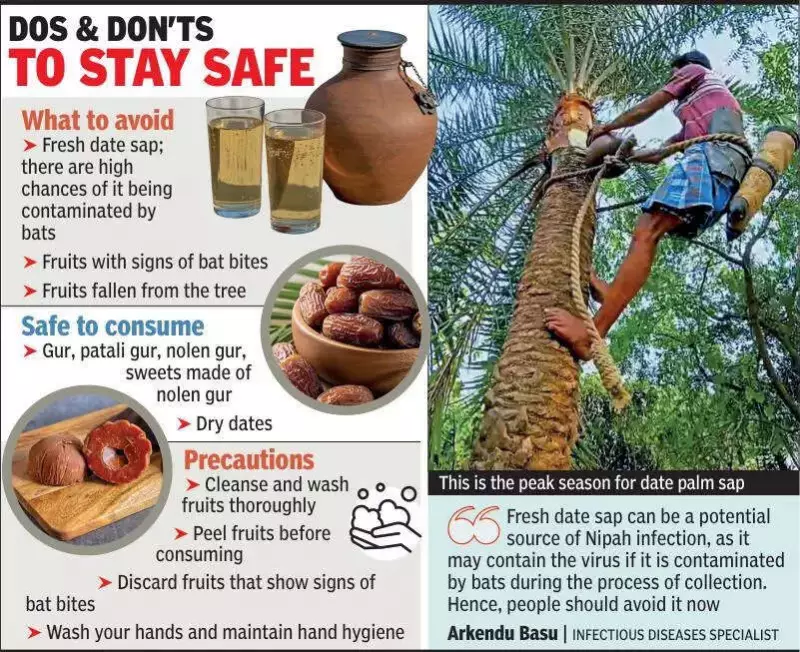
"This is the peak season for date palm sap, which many consume regularly," said Professor Prabhas Prasun Giri, a paediatrics expert at the Institute of Child Health. "For many Kolkatans visiting rural Bengal, relishing this sap is on their bucket list. They must avoid it now as it is a potential source of the Nipah virus."

The fresh sap is collected by hanging a pot on the tree overnight. This method unfortunately provides an opportunity for bats to access and contaminate the liquid.
Safe Alternatives and Fruit Precautions
Professor Giri offered reassurance about processed products. "Gur—patali or nolen—that is prepared after intense heating of the raw sap is completely safe to consume," he clarified. These processed items are widely available in Kolkata markets, especially during this season when sweets made with nolen gur are in high demand.
Experts are also urging caution with fresh fruits. Fruit bats feed on various fruits hanging on trees. "We need to be very careful while eating fruits," emphasized Dr. Bhaskar Narayan Chaudhuri, chief microbiologist at Peerless Hospital.
He recommended specific safety steps:
- Wash fruits thoroughly before eating them.
- Peel fruits to be on the safe side.
- Avoid fruits that show visible signs of bat bites.
- Do not consume fruits that have fallen on the ground, as bats may have bitten them.
Historical Context and Seasonal Patterns
This warning is based on solid evidence. In most previous Nipah outbreaks in India—including incidents in Kerala and Bengal—and in neighboring Bangladesh, the primary infection source was traced to fresh palm sap contaminated by fruit bats.
"Fresh date sap can be a potential source of Nipah infection," confirmed Dr. Arkendu Basu, an infectious diseases specialist at Mission Hospital in Durgapur. "It may contain the virus if contaminated by bats during collection. Hence, people should avoid it now."
Dr. Chaudhuri noted a clear seasonal pattern. "The season for Nipah outbreaks in India typically falls between December and May," he stated. This coincides perfectly with the peak availability of fresh date palm sap.
Broader Transmission Risks
The virus demonstrates concerning durability. Experts confirm it can survive in raw date sap or on contaminated fruits for several days. This makes these items potential transmission modes if proper precautions are not taken.
There is also an indirect transmission chain to consider. Leftover fruits bitten by bats that fall to the ground can infect animals like pigs and horses that consume them. These animals then become intermediate hosts.
While India has not reported Nipah transmission from these animals to humans, such cases have been documented in other countries including Malaysia, Singapore, and the Philippines.
Final Recommendations
The consensus among health professionals is clear and practical:
- Avoid consuming fresh, raw date palm sap (khejur rash) entirely during this season.
- Enjoy processed products like gur, patali gur, or nolen gur without worry, as the heating process eliminates the virus.
- Practice rigorous fruit hygiene: wash properly, peel when possible, and inspect for bite marks.
- Stay informed about the seasonal risk period from December through May.
The message is about caution, not panic. By following these simple guidelines, Kolkatans can protect themselves while still enjoying seasonal traditions safely.