Hyderabad Study Uncovers Alarming Surge in Drug-Resistant Eye Infections
A groundbreaking collaborative study conducted by Hyderabad's CSIR-Centre for Cellular and Molecular Biology (CCMB) and LV Prasad Eye Institute (LVPEI) has revealed a deeply concerning escalation in antimicrobial resistance (AMR) within eye infections. The research, which represents one of the most comprehensive genomic analyses of ocular pathogens ever conducted in India, found that more than 45% of bacterial isolates obtained from patient samples exhibited multidrug-resistant properties.
Widespread Resistance to Common Antibiotics
The investigation, published in the prestigious journal 'Communications Biology', documented extensive resistance to fluoroquinolones across all examined pathogens. This discovery raises significant alarms regarding the effectiveness of current treatment protocols in ophthalmic medicine. The research team, led by Karthik Bharadwaj and Divya Tej Sowpati from CCMB alongside Dr. Joveeta Joseph from LVPEI, employed a multidisciplinary approach to uncover these troubling findings.
"To understand and solve a problem like AMR, it is essential for clinicians and scientists to come together and contribute through their expertise," emphasized Dr. Vinay K Nandicoori, Director of CSIR-CCMB. "This is not a problem to be solved with model organisms but rather with real patient samples."

Discovery of Highly Resistant Bacterial Strains
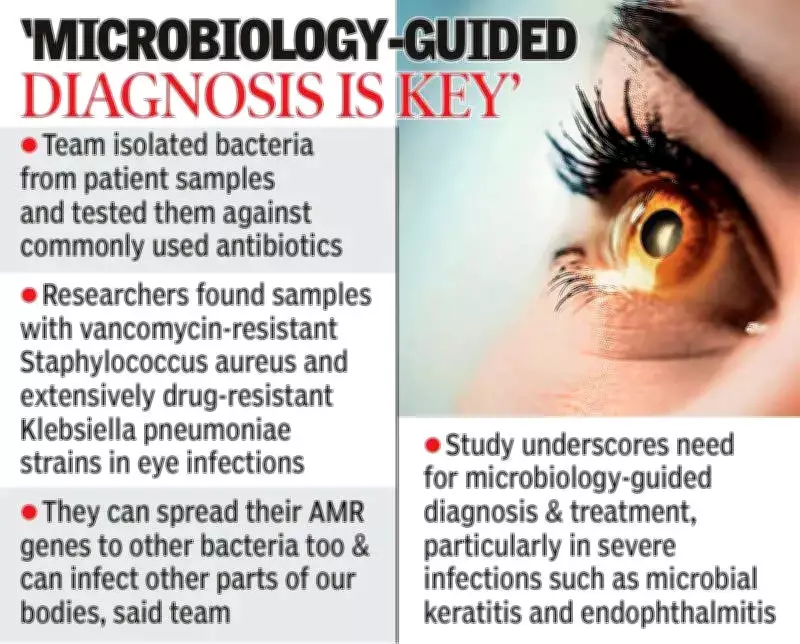
Through meticulous laboratory work, researchers isolated bacteria from clinical samples and tested them against commonly prescribed antibiotics. The results were startling. "We found samples with vancomycin-resistant Staphylococcus aureus and extensively drug-resistant (XDR) Klebsiella pneumoniae strains involved in eye infections," reported lead researcher Karthik Bharadwaj. "These findings are worrying because they can spread their AMR genes to other bacteria too. Also, these pathogens can infect other parts of our bodies."
The study utilized advanced whole-genome sequencing techniques to identify novel resistance mechanisms and genetic mutations. This approach provided unprecedented insights into how these dangerous pathogens evolve and disseminate within populations.
Implications for Clinical Practice and Public Health
The high prevalence of antimicrobial resistance documented in this research makes empirical treatment approaches increasingly unreliable. The study strongly advocates for microbiology-guided diagnosis and targeted treatment, particularly for severe ocular conditions such as microbial keratitis and endophthalmitis.
"While genomic tools are not yet part of routine clinical workflows, the insights generated through this study provide a critical foundation for developing region-specific treatment guidelines and strengthening antimicrobial stewardship efforts in ophthalmology," explained Dr. Joveeta Joseph, Head of Microbiology at LVPEI.
Broader Implications for AMR Surveillance
Researchers emphasized that eye infections should not be viewed in isolation from broader public health concerns. The microorganisms responsible for these infections frequently originate from the skin or surrounding environment, creating a direct connection between ophthalmic health and the wider antimicrobial resistance burden.
"This study positions the eye as a valuable site for AMR surveillance in the environment around us," stated Dr. Prashant Garg, Executive Chair of LVPEI. This perspective highlights the importance of comprehensive monitoring systems that recognize the interconnected nature of microbial resistance across different bodily systems and environmental reservoirs.
The Hyderabad-based research underscores the urgent need for enhanced diagnostic capabilities, more prudent antibiotic prescribing practices, and continued scientific collaboration between clinical and research institutions to address the growing threat of antimicrobial resistance in eye care and beyond.