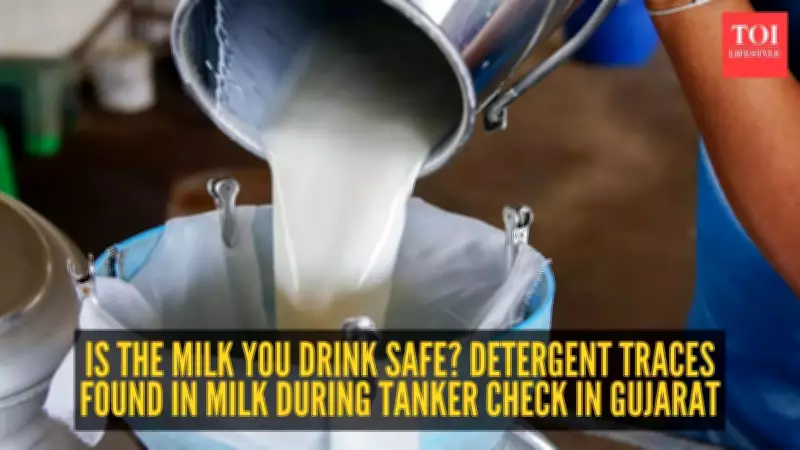
Detergent Found in Gujarat Milk Tanker, Food Safety Officials Lack Testing Kits
Milk is a fundamental staple in countless Indian households, widely trusted for daily consumption in tea, cooking, and various culinary applications. However, a recent alarming incident in Junagadh, Gujarat, has cast a shadow over this trust, raising serious concerns about milk safety and regulatory oversight.
Tanker Intercepted Following Tip-Off on Suspected Fake Dairy Operation
According to reports, officials initiated an inspection after receiving credible information about a suspected counterfeit dairy operation active in certain parts of Gujarat. Acting promptly on this tip-off, a dedicated team intercepted a milk tanker allegedly originating from Leria village in the Visavadar region. This proactive measure was aimed at curbing potential malpractice in the dairy supply chain.
Preliminary On-Spot Test Reveals Disturbing Contaminants
Upon stopping the tanker, officials conducted a rapid preliminary test using a basic field kit to assess the quality of the milk supply. The initial results reportedly indicated the presence of detergent powder and various synthetic substances. Such adulterants are often illicitly added to milk to artificially increase its volume and enhance its thickness, deceiving consumers and compromising product integrity.

The health implications of consuming adulterated dairy products are significant, as regular intake can lead to various health risks, including gastrointestinal issues and long-term toxicity. This discovery has therefore sparked widespread concern about what ultimately reaches consumers' tables, highlighting vulnerabilities in food safety protocols.
Food Safety Department Hampered by Lack of Essential Equipment
In a revealing twist, when officers from the Food Safety Department were summoned for a more thorough inspection following the tanker's interception, they arrived without the necessary testing kits. This equipment shortfall meant that the quality of the milk could not be properly verified on the spot, delaying definitive action and underscoring systemic gaps in field enforcement capabilities.
Samples Sent for Laboratory Analysis Amid Calls for Stringent Action
Officials have stated that collected samples from the tanker will now be sent to a certified laboratory for comprehensive analysis. The final report from this detailed testing is expected to take several months to complete, prolonging the uncertainty surrounding this case.
In the aftermath of this incident, local residents and activists have voiced strong demands for strict legal action if adulteration is conclusively confirmed. There is also a growing call for better equipment and resources for field officers to enable more efficient and immediate checks during inspections, thereby enhancing overall food safety vigilance.
This incident serves as a critical reminder of the ongoing challenges in ensuring milk purity and the urgent need for robust regulatory mechanisms to protect public health.