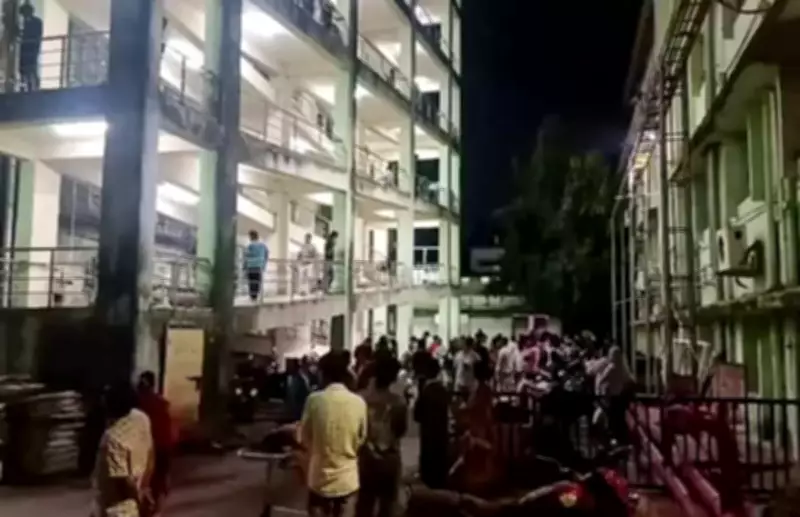
Cuttack Hospital Fire Tragedy: Delayed Alarm and Faulty Equipment Blamed for 12 Deaths
In a devastating incident at SCB Medical College and Hospital in Cuttack, a fire broke out in the trauma ICU during the early hours of Monday, resulting in the deaths of 12 patients. Relatives and attendants have come forward with serious allegations, pointing to a delayed alarm system and malfunctioning fire safety equipment as key factors that exacerbated the crisis.
Chaotic Evacuation and Alleged Delays
According to eyewitness accounts, the fire ignited between 2:30 AM and 3:00 AM, catching many off guard. Suraj Dalei, whose uncle Madhusudan (52) perished in the blaze, described hearing unusual sounds before seeing flames engulf the ICU area. "There was chaos as hospital staff started moving patients out in a hurry," he recounted, highlighting the frantic nature of the evacuation.
Attendants have strongly criticized the hospital's response time, alleging that authorities failed to raise an alarm promptly. Ranjan Sahoo, an attendant, claimed that a siren was only sounded after the fire had intensified, allowing smoke to fill the ICU. "Had authorities been informed immediately, many lives could have been saved," he asserted, suggesting that quicker action could have prevented fatalities.

Non-Functional Safety Equipment Worsens Crisis
Further compounding the tragedy, relatives reported that critical fire safety installations within the ICU, such as sprinklers and extinguishers, did not activate during the emergency. Prakash Nayak, another attendant, noted that hospital staff initially attempted to control the fire manually before realizing the equipment was ineffective. "We saw hospital staff trying to control the fire first. Later we came to know that the sprinklers and fire extinguishers did not work, making the situation more dangerous," he explained, underscoring the peril faced by critically ill patients.
Restricted Access and Communication Breakdown
The ICU, being a restricted area, limited access for patient attendants, leading to a severe information gap during the crisis. Subodh Behera expressed frustration, stating, "We were standing outside and security guards did not allow us to enter as it is a restricted area. We had no idea what was happening to our patients." This lack of transparency added to the distress of families awaiting news.
Sources indicate that fire services were notified approximately 15 minutes after the fire intensified, with firefighters arriving at the hospital after another 15-minute delay. Despite these challenges, personnel from the Odisha Fire and Emergency Services managed to bring the blaze under control. Sanjib Behera, the city fire officer, commented, "Our personnel ensured the evacuation of patients from the affected area. The exact cause of the fire will be known only after a detailed investigation."
Investigation and Aftermath
At the time of the fire, at least 23 patients were admitted to the ICU, making the evacuation process particularly critical. The incident has raised serious questions about hospital safety protocols and emergency preparedness in medical facilities. Authorities are now focused on a thorough investigation to determine the root cause of the fire and assess accountability for the alleged failures in alarm systems and equipment functionality.
This tragedy in Cuttack serves as a stark reminder of the importance of robust fire safety measures in healthcare settings, especially in intensive care units where patients are most vulnerable. As the community mourns the loss of 12 lives, calls for improved safety standards and quicker emergency responses are growing louder.