Supreme Court Raises Alarm Over Conflict of Interest in Delhi Ridge Management Board
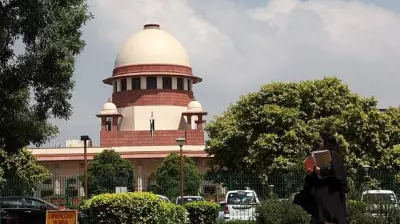
Four months after directing the establishment of a 13-member statute-backed Delhi Ridge Management Board (DRMB) to preserve the vital green lungs of the national capital, the Supreme Court on Monday expressed grave doubts about its efficacy. The court pointed out that except for three members, there is a clear conflict of interest regarding the rest, as they are linked to the government.
Background of the DRMB Constitution
On November 11, a bench comprising Chief Justice B R Gavai and Justice K Vinod Chandran had directed the Centre to issue a notification under Section 3(3) of the Environment Protection Act for the establishment of the committee. This committee is headed by the Delhi Chief Secretary, with the explicit mandate that "DRMB must work with the sole purpose of preservation and restoration of the Delhi Ridge area."
The other members of the board include the DDA vice-chairman, a representative each from the Directorate General of Forests (MoEF & CC) and the Union Ministry of Urban Affairs, the MCD commissioner, NDMC chairman, director general of CPWD, a representative of the Delhi Police commissioner, Delhi government's principal secretary (forest), two representatives of NGOs and civil society to be nominated by the Delhi government, the Delhi principal conservator of forest, and a representative of the Central Empowered Committee (CEC).
Court's Scrutiny and Concerns
On Monday, a bench led by Chief Justice Surya Kant, along with Justices Joymalya Bagchi and Vipul M Pancholi, raised serious questions about the board's composition. "There is a direct conflict of interest. DDA vice-chairperson is the second most important member of the DRMB. If the government wants Ridge area land for urbanisation, which of the members except two or three would oppose it? So, who will protect the Ridge?" the bench remarked.
Despite the Centre's submission that it had issued a notification on December 1 last year giving statutory backing to the DRMB, the bench remained unconvinced. It has asked the Union government to file an affidavit within four weeks, providing detailed information on:
- The authorities dealing with the Ridge in Delhi.
- The composition of any committees involved.
- The duties assigned to them concerning the Ridge, forest, and related issues.
Broader Environmental Perspective
The CJI-led bench also questioned why the Delhi Ridge is being treated separately, with so much focus solely on the green areas of Delhi. "Delhi Ridge is a small component of Aravali Hills, and similar efforts must go towards keeping the entire range and the towns nestled there green with forest cover," the court emphasized.
It urged a shift in mindset, stating, "We must get out of the mindset that efforts should be focused on keeping Delhi and adjoining areas, being part of the national capital territory, green and maintaining the forest cover. We must have a holistic approach towards all the towns across India. If CEC is looking after the green cover of entire Aravali ranges, why can't it look after Delhi Ridge, which is a small component of the Aravali forests?"
Historical Context and Current Status
During the proceedings, amicus curiae and senior advocate K Parameswaran informed the bench that the DRMB was originally constituted by the Supreme Court in September 1995, yet encroachments remain rampant. In response, the Delhi government informed the court that over 4,000 hectares of the southern Ridge have been declared as reserve forest.
In its November 11 judgment, the Supreme Court had noted, "The effect of non-notification of Ridge as Reserve Forest deprives the said area of any protection… We find that the GNCTD has not acted with swiftness in protecting the Ridge." This highlights ongoing challenges in safeguarding this critical ecological zone.
The court's latest observations underscore the urgent need for a more effective and unbiased mechanism to protect the Delhi Ridge, ensuring that environmental preservation takes precedence over potential conflicts of interest.