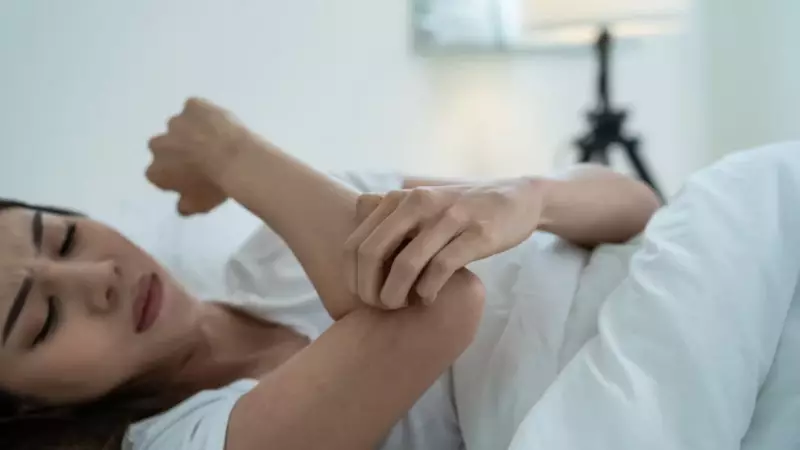
For Ekta Chauhan, a simple declaration holds profound power: "I have psoriasis." In a deeply personal account published on December 18, 2025, the assistant professor from The Jindal School of Design and Architecture, OP Jindal Global University, details the relentless physical and emotional reality of living with this chronic autoimmune disease. Her story is not just about medical symptoms, but about the exhausting societal loop of blame and simplistic advice that often accompanies invisible illnesses.
The Hidden Burden of a 'Non-Life-Threatening' Condition
Psoriasis, as Chauhan explains, is far more than a skin issue. It is a condition where the immune system malfunctions, causing skin cells to regenerate at an abnormally rapid pace. This leads to the formation of thick, inflamed, and scaly patches. Globally, it affects approximately 125 million people, according to the National Psoriasis Foundation. While not contagious, its roots are complex, tied to genetics, immunology, environment, and emotional well-being.
For Chauhan, the battle became intensely personal in early 2024 when a severe flare-up erupted on the soles of her feet. For nearly two years, this patch has refused to heal, resulting in cracking skin, constant pain, and bleeding with every step. "Because it is on my feet, it remains largely hidden from view," she writes. Yet, this invisibility masks a profound disruption. The condition dictates her movement, her stamina, and her daily planning, shadowed by the perpetual fear of bleeding through bandages or shoes.

The Exhausting Loop of Blame and Simplistic Advice
While the search for physical relief has been costly and elusive, Chauhan identifies a more draining adversary: the pervasive narrative that pins her illness on stress. "Again and again, I am told that stress causes my illness — as though stress were something I am choosing, or failing to control," she states. This advice to relax, meditate, do yoga comes from doctors, relatives, and even casual acquaintances.
To someone already forced to give up running, yoga, and favourite foods due to dietary restrictions, this well-meaning counsel feels like a verdict. It implies, she feels, that if her body does not heal, her mind has failed. This external pressure compounds the internal struggle, transforming her condition into a public project where her refusal of unsolicited treatment suggestions is seen as stubbornness, and concern often slips into control.
The Gendered Layer of Shame and Invisibility
Chauhan's experience is further shaped by her identity as a woman. She is frequently told to be grateful the condition isn't "visible" on her arms or face, underscoring a societal pressure for women to remain "pleasant to look at." This, coupled with constant scrutiny over her weight and skin tone, has led her to internalize a deep sense of shame. She wears socks constantly, even indoors with guests, and dreads rituals that require removing footwear.
"Pain in the feet limits where I can go, how long I can stand, and how freely I can move through the world," she notes, highlighting how the disease attacks the very sites of mobility and independence. The result is a gradual withdrawal from public spaces, often easier than enduring the burden of explanation.
Redefining Time and Finding Solace in Partnership
Living with psoriasis has forced Chauhan to abandon the concept of a linear recovery. "There is no clear recovery, no return to normal," she writes. Instead, there is a slow, often lonely process of embodied learning. In this challenging journey, she finds profound gratitude for her husband, who provides tangible support—bandaging her feet nightly, researching dietary recipes, and studying medical journals to stay abreast of developments in a rapidly evolving field where a cure may one day be found.
Ultimately, Ekta Chauhan's narrative is a powerful plea for a shift in perspective. She articulates that chronic illness is not merely a medical diagnosis but a comprehensive emotional reality. It demands empathy rather than advice, care rather than correction. Her story, emerging from the quiet pain of cracked feet, is a resonant call to look beyond simplistic solutions and truly see the person within the patient.