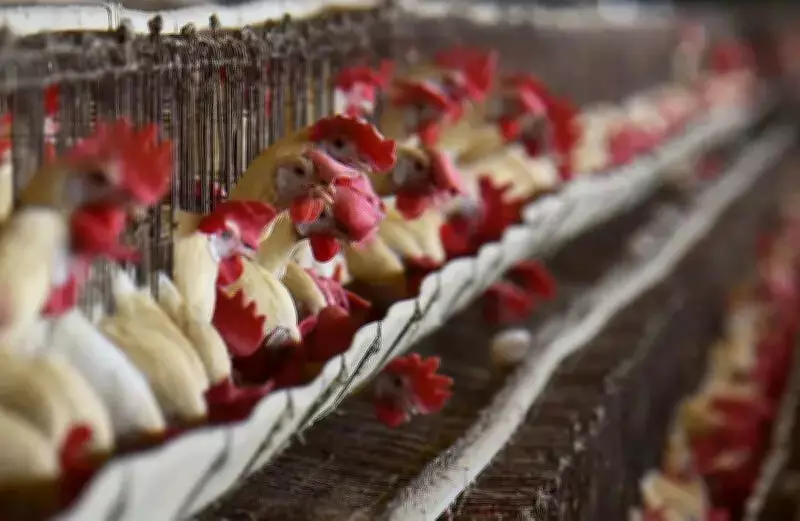
Central Expert Team Conducts Ground Assessment of Bilaspur Bird Flu Outbreak
The Central government has intervened in the avian influenza outbreak in Bilaspur, Chhattisgarh, deploying a multi-disciplinary expert team to conduct a comprehensive ground assessment. This move comes as ongoing containment measures continue to severely disrupt the local poultry economy, affecting hundreds of livelihoods.
Expert Inspection of Key Facilities and Containment Zones
A four-member team comprising experts from the All India Institute of Medical Sciences (AIIMS) and the National Centre for Disease Control (NCDC) conducted inspections on Monday and Tuesday. The team visited critical facilities including the collectorate control room established specifically for bird flu management, Chhattisgarh Institute of Medical Sciences (CIMS) hospital, and the government poultry farm in Koni where avian influenza (H5N1) was confirmed last month.
The outbreak, initially detected between March 19 and 24, prompted immediate containment actions including the culling of thousands of infected birds, extensive disinfection drives, and strict movement restrictions. Authorities established both an infected zone and a broader surveillance belt to prevent potential spillover of the virus to other areas.

Detailed Examination of Biosecurity and Healthcare Preparedness
Officials reported that the central team meticulously examined sanitation protocols and biosecurity measures implemented at the Koni poultry farm. The experts sought detailed information from the animal husbandry department regarding the possible source of infection, which remains unidentified despite thorough investigations. As part of containment protocols, all infected birds, hatchlings, and related materials were systematically destroyed to prevent further transmission.
The assessment team also conducted a comprehensive review of healthcare preparedness at CIMS hospital, evaluating microbiology laboratory facilities, isolation ward capabilities, ventilator support systems, and overall bed capacity. Hospital records of patients with suspected symptoms were scrutinized to ensure proper monitoring protocols were in place. Importantly, no human infections have been reported thus far in connection with this outbreak.
Expanded Surveillance and Economic Impact
On Tuesday, surveillance activities expanded beyond the initial epicenter, with health screening and sample collection operations underway in multiple villages including Akaltara, Khaira, and Nagoi within a 10-kilometer radius of the affected area. Collector Sanjay Agrawal confirmed that a second round of disinfection spraying would be conducted to ensure maximum protection, and the specific farm identified as the infection source would remain closed for the next three months as a precautionary measure.
The district administration has implemented a comprehensive ban on the sale, purchase, and transportation of all poultry products within the restricted zone, with continuous monitoring extending to surrounding areas. However, these prolonged restrictions have created significant economic hardship for local communities.
More than 200 chicken shops in and around Bilaspur remain forcibly closed, directly affecting hundreds of families whose livelihoods depend entirely on the poultry trade. Frustrated poultry traders and shop owners gathered at the collectorate office, submitting a formal memorandum requesting permission to resume their businesses and highlighting the severe financial strain caused by the extended closures.
Ongoing Challenges and Future Measures
The central team's assessment represents a crucial step in understanding the outbreak's dynamics and strengthening response mechanisms. While containment measures have effectively prevented human transmission thus far, the economic consequences for the local poultry industry continue to mount. Authorities face the dual challenge of maintaining rigorous disease control protocols while addressing the legitimate concerns of affected businesses and workers.
The situation underscores the complex interplay between public health imperatives and economic realities during disease outbreaks, particularly in regions where specific industries form the backbone of local economies.