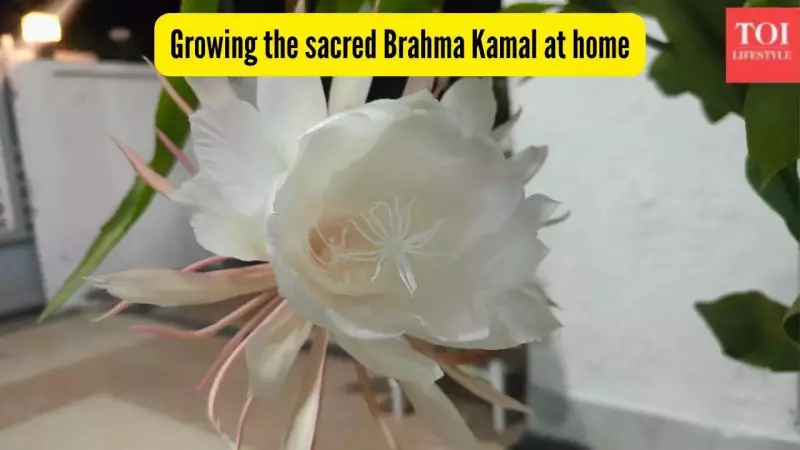
For centuries, the elusive Brahma Kamal, or Saussurea obvallata, has captivated spiritual seekers and nature lovers from its high-altitude Himalayan home. Revered as one of India's most sacred blooms, this nocturnal flower is steeped in mythology and is famously the State Flower of Uttarakhand. While adventurers trek to the Valley of Flowers for a glimpse, a pressing question arises for devotees and gardening enthusiasts alike: can this symbol of divinity be nurtured in an urban home? The answer is a hopeful yes, but it demands dedication and an understanding of its unique needs.
The Mythic Allure and Rarity of the Brahma Kamal
This isn't just any garden plant. The Brahma Kamal is a flowering herb native to the lofty Himalayan ranges of India, Nepal, Bhutan, and Southwest China. Its rarity is legendary; the cup-shaped blossoms, often hidden within protective bracts, unfurl only under the cover of night and wilt by dawn, emitting a heavenly fragrance. This fleeting beauty has cemented its status in Hindu mythology as a divine symbol closely associated with Lord Brahma, the creator.
Beyond spirituality, the flower holds a unique place in horticulture and culture, even featuring on Indian postal stamps. According to Vastu Shastra, the plant is highly auspicious. Vastu expert Surya Tamang from Dehradun notes that placing it in specific areas like the home's centre (Brahmasthan) or the northeast (Ishan Kona) can attract prosperity, fortune, and harmonious energy, cleansing the home's aura and promoting positivity.

Creating a Himalayan Sanctuary: How to Grow Brahma Kamal
Successfully cultivating Brahma Kamal outside its natural habitat is a challenge, but not an impossible one. It requires meticulously replicating its cool, high-altitude environment. Unlike typical houseplants, it will not tolerate hot, humid conditions.
Essential Growing Conditions
Temperature: This is the most critical factor. The plant thrives in consistently cool temperatures. Placing it in air-conditioned rooms or cool, shaded areas is essential for survival, especially in Indian plains.
Soil: A well-draining mix is non-negotiable to prevent fatal root rot. A perfect blend of garden soil, coarse sand, and cocopeat ensures the roots never sit in standing water.
Light: Bright, indirect light is ideal. Harsh, direct midday sun will scorch and yellow its leaves, so a spot with filtered sunlight is perfect.
Watering: Practice moderation. Water only when the topsoil is completely dry, and be vigilant against overwatering, which is a common pitfall.
Propagation: For home gardeners, propagation from leaf cuttings is more feasible than slow-growing seeds. Allow the cut end to dry and callus for a few days before planting it in the prepared soil mix under indirect light.
Patience, Challenges, and the Ultimate Reward
Growing Brahma Kamal is a test of patience. The growth rate is not rapid, and the first bloom may take several years. Key challenges include maintaining a consistently cool temperature and avoiding frequent repotting or poor watering habits that disrupt its delicate growth cycle.
However, the reward transcends horticultural achievement. Witnessing the rare, night-time bloom of a Brahma Kamal you've nurtured is considered a blessing, believed to bring luck. More tangibly, having this sacred plant at home fosters a profound sense of peace, emotional calm, and optimism, making the meticulous care spiritually and mentally fulfilling.
So, while it demands careful attention, growing the sacred Brahma Kamal on your balcony or in a cool corner of your home is a deeply rewarding endeavor. It connects you to the mystic Himalayas and invites its ancient blessings into your modern living space.