

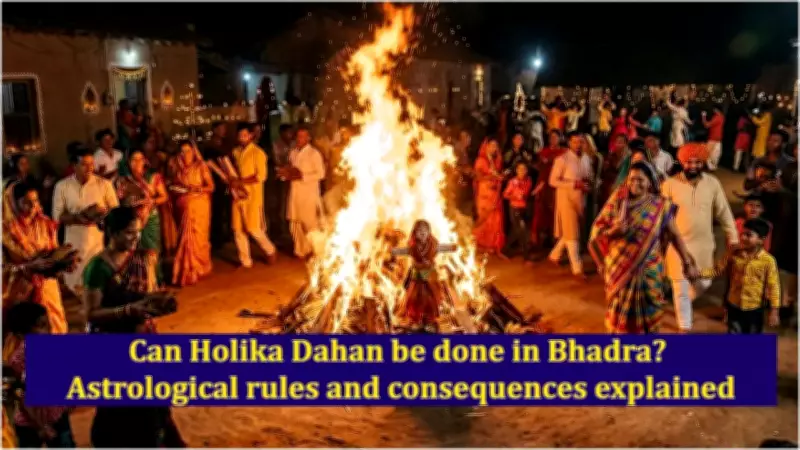
Astrological Warning: Holika Dahan 2026 and the Bhadra Period
In a significant astrological advisory, experts emphasize that Holika Dahan should not be performed during the Bhadra period in 2026. Classical texts such as Nirnay Sindhu and Dharm Sindhu strongly recommend avoiding this timing, citing planetary alignments that make it crucial for this year. This guidance stems from ancient muhurta practices, where Bhadra is considered a period of restraint rather than initiative.
Understanding the Significance of Bhadra
In muhurta practice, Bhadra is associated with sharpness, impatience, and outcomes that may not unfold smoothly. Holika Dahan, a ritual symbolizing protection and renewal for the coming year, when conducted during this friction-filled time, risks reflecting unrest instead of cleansing. The concern is that the fire meant to purify could inadvertently amplify tensions.
Planetary Alignments for Holi 2026
The sky during Holi 2026 presents an unusual concentration of astrological signals. A strong stellium in Aquarius draws attention to systems, collective decisions, and societal organization. Additionally, the festival falls under the shadow of two closely occurring eclipses, creating a corridor that shifts the focus from celebration to transition.

The Lunar Eclipse axis becomes particularly sensitive as the Moon joins Ketu in Leo, a combination often associated with a shift away from image and performance toward truth and detachment. With the Sun, ruler of Leo, placed opposite in a Rahu-influenced zone, this planetary pattern suggests a period of recalibration for authority, visibility, and public sentiment.
Long-Term Effects Over Twelve Months
Holika Dahan is tied to seasonal transitions, and acts performed at such thresholds are believed to influence the cycle ahead. When conducted during Bhadra, the effects may not be immediate but can linger, leading to a year where situations feel more reactive, decisions are harder to stabilize, and harmony requires extra effort.
Collective and Social Implications
At a collective level, performing Holika Dahan publicly during Bhadra is associated with a year of heightened tempers, prolonged disagreements in governance, and social tensions that take longer to settle. Fire symbolism also connects this timing to an increased likelihood of fire-related incidents or sudden confrontations.
With a dominance of the air element and the Aquarius stellium, water-related incidents may rise, and emotional suffering could become more prevalent among people.
Impact on Housing Societies and Families
In housing societies or condominiums where the ritual is performed collectively, residents may experience strained relationships over the next year. Small issues could take longer to resolve, committee decisions might drag, and unexpected repair costs could arise. Financial disagreements and internal group dynamics are likely to feel more tense.
At a personal and family level, the year following a Bhadra-timed Holika Dahan is often marked by quick reactions and slow reconciliations. Sibling disputes, property matters, or financial choices will demand extra caution, as impulsive decisions may lead to higher costs than anticipated.
The Core Message of Tradition
Rituals of protection, when performed during steady moments, reinforce stability. However, when conducted in unsettled periods like Bhadra, they call for greater awareness afterward. Holika Dahan is intended to mark renewal, and tradition advises choosing the moment carefully to ensure that renewal arrives with ease rather than resistance.
Author Background: Sidhharrth S Kumaar, Founder and Chief Happiness Officer of NumroVani, is a registered pharmacist turned Astro Numerologist, Life & Relationship Coach, and Mantra & Music Therapist. With over a decade of practice, he has mastered astrology, numerology, and Samudrik Shastra, combining his research into published works and speaking engagements, including TEDx and Josh Talks.






