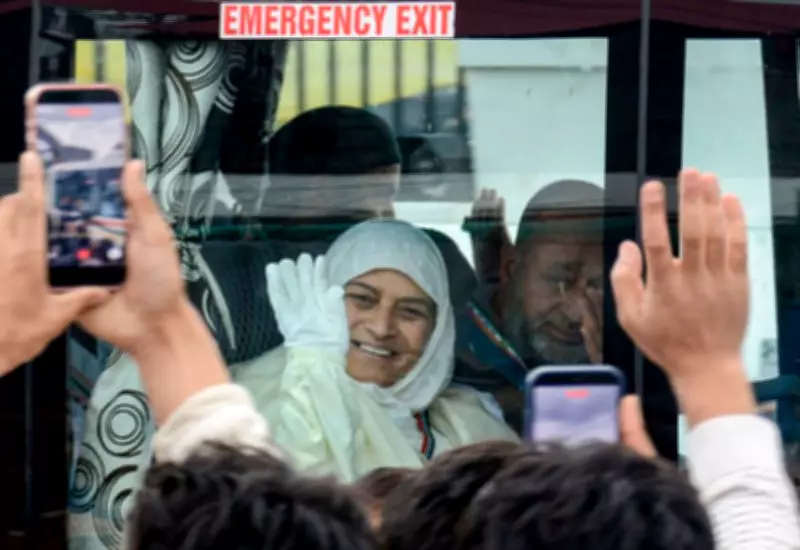
Haj Pilgrimage Commences with Departures from Multiple Indian Cities
The annual Haj pilgrimage, a cornerstone of Islamic faith, has officially begun as hundreds of devout Indian Muslims embarked on their sacred journey from key departure points across the country. This significant spiritual event marks the start of a period of deep religious observance and community unity.
Departures from Vijayawada, Srinagar, and Delhi
In a coordinated effort, pilgrims set off from Vijayawada in Andhra Pradesh, Srinagar in Jammu and Kashmir, and Delhi, the national capital. These cities served as major hubs for the initial phase of the pilgrimage, with authorities ensuring smooth logistics and support for the travelers. The departures were marked by emotional farewells and prayers, reflecting the profound personal and communal significance of Haj.
From Vijayawada, a large contingent of pilgrims gathered at the local airport, where family members and well-wishers bid them farewell. Similarly, in Srinagar, the cold morning air was filled with anticipation as groups assembled for their journey to Mecca. In Delhi, the Indira Gandhi International Airport saw a steady stream of pilgrims, many of whom had traveled from neighboring states to join the flight.

Logistical Arrangements and Support
Authorities in all three cities have implemented comprehensive arrangements to facilitate the pilgrimage. This includes dedicated check-in counters, medical facilities, and assistance for elderly or disabled pilgrims. The Haj Committee of India has been actively involved in coordinating these efforts, ensuring that all necessary protocols are followed for a safe and smooth journey.
Key aspects of the logistical support include:
- Enhanced security measures at departure points to ensure pilgrim safety.
- Provision of travel kits containing essential items for the journey.
- Medical teams on standby to address any health concerns during travel.
- Coordination with Saudi Arabian authorities for seamless entry and accommodation in Mecca.
Spiritual and Cultural Significance
The Haj pilgrimage is one of the Five Pillars of Islam, obligatory for all Muslims who are physically and financially able to undertake it at least once in their lifetime. It involves a series of rituals performed in and around Mecca, Saudi Arabia, over several days. For Indian Muslims, this journey represents not only a religious duty but also a moment of cultural pride and global connection.
This year's departures highlight the diversity and unity within the Indian Muslim community, as pilgrims from different regions come together for a shared spiritual experience. The event also underscores India's role in facilitating religious tourism and fostering interfaith harmony.
Future Implications and Community Impact
The successful commencement of the Haj pilgrimage sets a positive tone for the upcoming weeks, with more departures expected from other Indian cities in the coming days. It is anticipated that thousands of pilgrims will participate this year, contributing to the global gathering of Muslims in Mecca.
This annual event not only strengthens religious bonds but also has economic implications, supporting travel and hospitality sectors. Moreover, it reinforces the importance of communal support and government assistance in enabling such large-scale religious endeavors.