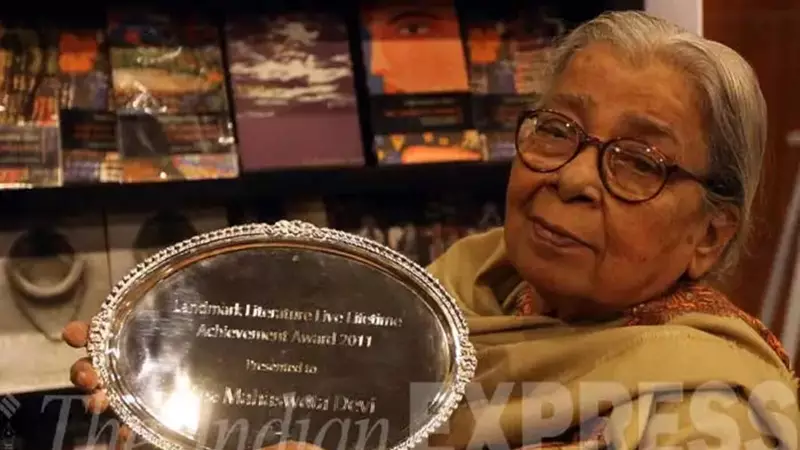
As India marks the birth centenary of Mahasweta Devi, her legacy feels more urgent than ever. The celebrated writer and activist, who passed away in 2016, dedicated her life to amplifying the voices of the marginalized. Today, many wonder how she would react to the current socio-political landscape.
A Formative Education at Shantiniketan
Born in Dhaka in 1926, Mahasweta Devi received her schooling at Shantiniketan while Rabindranath Tagore still presided over the institution. This experience shaped her into the formidable woman she became. She once recalled, "In Shantiniketan, girls were never asked to be different from boys. We learned lathi khela and chora khela, the arts of fighting with bamboo sticks and knives. We cut branches from guava trees to make hockey sticks and played. That made us tough."
Giving Voice to the Voiceless
Devi's extensive body of work, spanning historical fiction and political narratives, was never mere entertainment for urban elites. She championed the causes of crying women hired for rich funerals, the "mothers of 1084," and tribals whose lands were seized by governments and handed to businesses. Her writing tackled caste discrimination, untouchability, tribal exploitation, women's conditions, and wealth inequality.

However, recent events suggest the ruling class no longer values such critical voices. A play based on her short story 'Draupadi' faced disruptions at a Haryana university. Delhi University removed it from the English Honors syllabus. These actions indicate that creative individuals holding up a mirror to society are now viewed with suspicion.
Branded Anti-National in Modern India
Had Mahasweta Devi been alive today, she likely would have been labeled an "anti-national." Her advocacy for tribal rights and social justice would be seen as an impediment to GDP-driven development, symbolized by bulldozers, even as 55% of Indians depend on free rations.
Thousands of hectares of forest land have been cleared for mining corporations, stripping millions of tribals of their livelihood. As someone who transformed the lives of 20,000 Kheria Sabar tribals in Purulia, West Bengal, through schools, vocational centers, and handicrafts projects, Devi would have been horrified by government apathy toward the marginalized.
Founding Activist Groups and Facing Backlash
As the founder of the Denotified and Nomadic Tribes Rights Action Group, Devi fought tirelessly for tribal rights. In today's climate, anyone standing up for such causes risks being marked as an enemy of the state. Her works, originally in Bengali, have been translated into nearly all Indian languages and many foreign ones.
As a global ambassador of India's rich culture, she would have been angered to see Bengali speakers hounded in parts of the country, branded foreigners, and placed in detention camps.
A Painful Reality She Is Spared
Thankfully, Mahasweta Devi is not here to witness this. The pain of seeing what India has become might have overwhelmed even a woman of her strength on her 100th birthday. Her grandson, Tathagata Bhattacharya, reflects that her spirit of resistance and compassion remains a guiding light in these challenging times.