6 Trailblazing Indian TV Heroines Who Redefined Women's Roles on Screen
Long before strong female characters became a mainstream trend, Indian television was quietly introducing protagonists who defied conventions, shattered traditions, and subtly reshaped the portrayal of women on the small screen. These characters were not merely part of the narrative; they actively transformed it, leaving a lasting impact that the genre continues to emulate. Here, we delve into six Indian TV female leads who were remarkably ahead of their time, setting benchmarks that are still being pursued today.
Tulsi Virani — 'Kyunki Saas Bhi Kabhi Bahu Thi'
In an era when women were often depicted as passive observers, Tulsi Virani stood firm and upheld her principles without ever raising her voice or losing her calm demeanor. She embodied the ideal daughter-in-law while simultaneously serving as a decisive figure who courageously spoke out against injustice, even when it involved her own family. Her strength was understated yet undeniable, establishing a gold standard for female protagonists on Indian TV that inspired countless imitations over the years.
Prerna Sharma — 'Kasautii Zindagii Kay'
Prerna's journey was a complex tapestry of love, loss, and unwavering resilience that never descended into self-sacrifice. What distinguished her was her ability to persevere through emotional turmoil that would have defined lesser characters. She refused to be confined to a single relationship or identity, instead continuously reinventing herself with a quiet, dignified determination that made her one of the most captivating female leads of her generation. Her story highlighted a truth rarely acknowledged in Indian TV at the time: a woman's strength shines brightest not in her triumphs, but in her capacity to rise after every fall.

Maya Mehrotra — 'Beyhadh'
Maya shattered all preconceptions of what a female lead on Indian TV should embody, emerging as a character marked by ambition, obsession, deep flaws, and an unapologetic intensity previously unseen in women on screen. At a time when female characters were expected to epitomize patience and sacrifice, Maya demonstrated that complexity and even darkness could exist in a woman without necessitating an immediate redemption narrative. She fundamentally altered the discourse on the potential of female characters in Indian television.
Sandhya Rathi — 'Diya Aur Baati Hum'
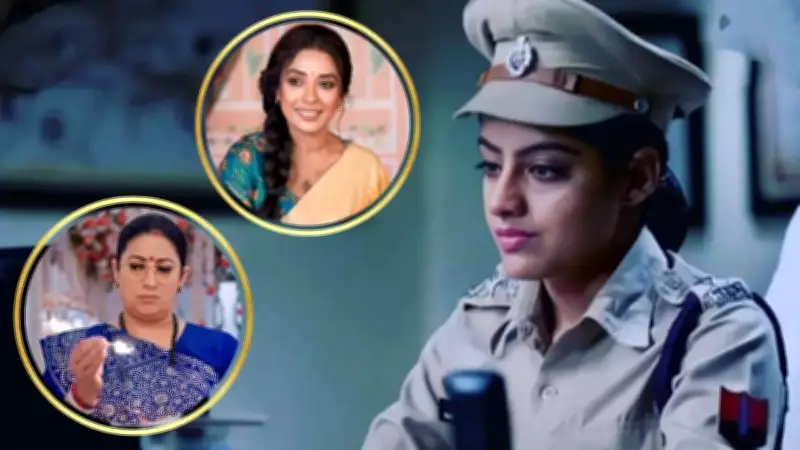
Sandhya was not merely pursuing a dream; she was actively challenging the rigid expectations imposed on daughters-in-law, a theme often treated as sacrosanct in Indian TV. As an aspiring IPS officer navigating a traditional family, she proved that ambition and devotion could coexist, and that a woman could honor her relationships without sacrificing her own identity. Her narrative was not just inspirational in the conventional sense but genuinely aspirational for an entire generation of female viewers.
Anandi — 'Balika Vadhu'
Anandi's evolution from a child bride to an empowered woman stands as one of the most deliberately progressive character arcs in Indian television history, portrayed with a patience and honesty that refused to trivialize the gradual nature of transformation. She symbolized change not as a sudden epiphany but as a slow, hard-earned process of self-discovery, with the show granting this journey the respect and time it deserved. In a genre that frequently reduced female characters to their relational roles, Anandi remained unequivocally the author of her own story.
Anupama — 'Anupamaa'
Even by contemporary standards, Anupama appears ahead of the curve, a middle-aged woman prioritizing self-respect over sacrifice at a life stage when both the genre and society expected her to simply endure. Her journey is not about reinvention but about finally embracing her true self, a pursuit the show treats as the most radical and essential act a woman can undertake. In a television landscape still grappling with the notion that a woman's narrative does not conclude at fifty, Anupama demonstrated that it can, in fact, mark a vibrant new beginning.