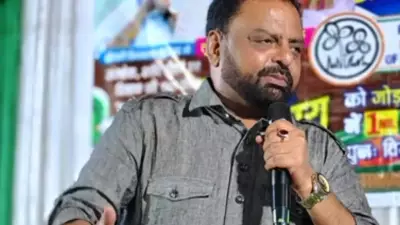
Syrian Rapper Al Darwish Makes Emotional Return to Damascus After 13-Year Absence
Hani Al Sawah, the Syrian rap artist who performs under the stage name Al Darwish, recently walked the streets of Damascus with a sense of awe and disbelief. It had been 13 long years since he last set foot in Syria's capital, a period marked by exile, war, and profound personal transformation.
A Historic Homecoming and Sold-Out Performances
Later that night, Al Sawah took the stage to perform his unapologetically political songs in his homeland for the first time without the Assad dynasty in power. The sold-out show on January 16, followed by another the next day, was an emotional milestone. "Never in my wildest dreams did I think I could ever return to Syria," he told The Associated Press, barely able to hear himself over the audience singing along to every lyric.
"I have this weird feeling that I never left, or that I left a part of me here that I was able to find again," Al Sawah reflected, capturing the surreal joy of his homecoming.

From Underground Rapper to Voice of the Uprising
Al Sawah's journey as a musician began in his hometown of Homs, where he discovered rap in 2001 and quickly embraced it as a medium for self-expression. He was part of an underground scene where artists exchanged songs and ideas, often facing scrutiny from authorities who criticized their attire and labeled the music as "devil worshipping" or Western imperialism.
During the 2011 uprising, his fiery lyrics about mass protests and defiance against dictatorship shed light on a rap scene few knew existed. After fleeing to Lebanon in 2012 and later to Germany, Al Sawah amassed a following online, with Syrians both at home and abroad relating to his music during the country's deadly civil war.
Reflections on a Changed Syria and Lingering Fears
Over a year has passed since a lightning insurgency in December 2024 ended the Assad dynasty's half-century rule, but Al Sawah only returned last month. While hopeful that the new rulers in Damascus will build a just and prosperous country, he expressed concern about incidents of violence that have turned sectarian.
"What happened here were fast and sudden changes, and we're only talking about Damascus," the rapper said after a stroll on a boulevard in the capital. "Sure it changed, but not like my city of Homs, Aleppo, or any of the cities where two-thirds or three-quarters of it were destroyed."
Al Sawah was surprised to observe a persistent fear of criticizing the new authorities among friends and others, a trait he described as "inherited" from decades under Assad's security apparatus. "If we want to say that the regime really did fall, then so should this fear," he asserted.
Addressing Sectarian Violence and Hopes for Unity
Online, Al Sawah has spoken out against sectarian violence, particularly referencing government counteroffensives against armed Assad loyalists in Alawite coastal areas and interventions in the Druze-majority province of Sweida, which resulted in hundreds of civilian deaths.
"If you can justify what happened on the coast — which of course you can't — by saying they were armed (Assad) loyalists and so on, then you cannot justify what happened in Sweida," he said, calling it a "fatal error" in the Islamist-led government's efforts to win minority support and reunify the country.
During his performance, Al Sawah paid tribute to these affected regions in one of his songs, nervous about the crowd's reaction. To his surprise, they cheered and applauded, giving him hope for the future. "This is the reaction I was looking for," he said. "It's what encourages me to come back."
Al Sawah's return symbolizes not just a personal triumph but a poignant moment in Syria's evolving narrative, as artists and citizens navigate the complexities of a post-Assad era.