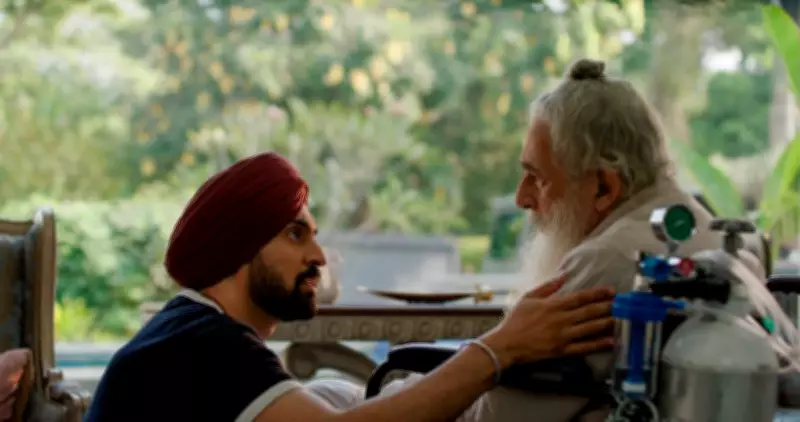
Imtiaz Ali's film 'Main Vaapas Aaunga' offers a poignant exploration of love and memory set against the horrors of Partition. Starring Naseeruddin Shah as Ishar Singh, a 95-year-old man grappling with dementia, and Diljit Dosanjh as his grandson Nirvair, the film delves into the lingering pain of separation and the power of remembrance.
Plot and Central Theme
Ishar Singh, portrayed by Naseeruddin Shah, has spent his entire life in the lingering pain of separation from his beloved Jiya/Afsana (played by Sharvari) during the Partition of India. On his deathbed, he resists death to keep a promise he made to Jiya to return. The film portrays love as a lingering ache carried across decades, emphasizing that the pain of the characters stems from circumstances beyond their control rather than betrayal or hatred.
Memory and Dementia
Ishar's memories have faded due to dementia, and he carries muddled thoughts of the days leading up to the Partition. His recollections are erratic, often fictionalizing events to produce a seemingly confused story. For instance, he attempts to visit Sargodha, which he believes is nearby, and ends up suffering a stroke at the border. The film suggests that memory is distorted and fragile, shaped not by what happened but by desire.

Role of Nirvair
Nirvair, Ishar's grandson, lives in the United Kingdom and is disconnected from his roots. As he helps Ishar navigate his memories, Ishar's devotion profoundly influences Nirvair's understanding of love and identity. Instead of Nirvair helping Ishar find closure, Ishar helps Nirvair discover a deeper sense of love that extends beyond possession or compulsion.
Partition Narrative
The film approaches Partition through Ishar's memories, focusing on love and sharedness rather than violence alone. Ishar remembers his budding love, his friend Aftab, his college, playing cricket, and his town Sargodha. He identifies the rioters as aliens from Mars, a metaphor that preserves his memory of a shared social world while acknowledging the gravity of the violence. The character of Ishar's younger brother Pali chooses to keep the pain within, fearing that sharing it would breed hatred.
Director's Vision
Imtiaz Ali, the director and co-writer, notes that "what you are pining for is the only thing that you carry with you as it is the only thing that you remember every day." The film's end credits feature the song 'Kya Kamaal Hai', envisioning a world free from hatred, juxtaposed with visuals of modern devastation and displacement.
Critical Reception
The film has been praised for its emphasis on empathy, especially in an age where violence and misogyny are often glorified. It embodies what art and cinema ought to do, according to Monica Sabharwal, who teaches English at Punjabi University.