Music has become a critical element for luxury brands aiming to sell aspiration. According to Pune-based fashion psychologist Aadhya Khare, "Consumers don't separate what they see from what they hear. Through sensory synchronisation, fashion and music work together to create a feeling, which is why music can completely change how a brand is experienced."
Music as a Brand Storyteller
As luxury shifts toward experience, sound is integral to branding. Fashion designer Kunal Rawal notes, "Music changes everything. People may notice the clothes or the interiors when they walk into our stores, but music is what makes the whole thing come alive." Anita Dongre echoes this, stating, "When we host events at our global flagship stores, music is the most immediate way to bring people into our world."
In-Store Music Creates Identity
In-store music extends a brand's identity. Rawal personally curates soundtracks for his collections, saying, "Our clothes are rooted in tradition… but they belong to a different generation. I couldn't find music that reflected that feeling, so we started creating our own. Today, every collection comes with its own soundtrack." Dongre adds, "Our stores are designed sensorially, not just visually. Music, along with our signature fragrance, helps create moments of memory. Music is never incidental in our stores. We maintain a carefully curated playlist that evolves every few months, but the mood remains consistent."

Hemant Mediratta, India Representative for Galeries Lafayette Paris Haussmann, explains, "At Galeries Lafayette Paris Haussmann, music forms part of a broader experiential strategy that evolves throughout the year alongside seasonal campaigns, festive moments, and cultural activations." Richa Chopra, a fashion consumer behaviour expert, notes, "Research on luxury retail experiences suggests that consumers perceive music as an important part of the brand experience, particularly when there is a strong fit between the music and the brand's identity."
Music Shapes Pace and Mood
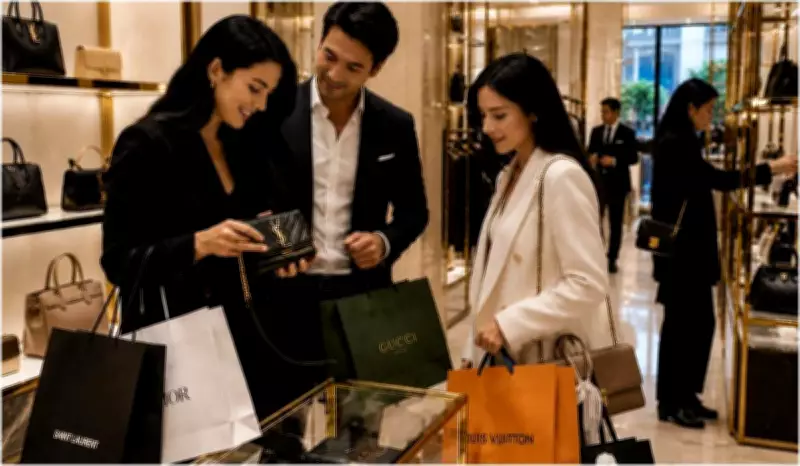
Chopra shares, "In luxury retail, music helps shape pace and mood. A peppy, playful soundtrack can create momentum in a store, encourage shoppers to move through the space with ease, and help them feel more connected to the brand environment." Ashwin Menon, chief marketing officer of Art of Time, adds, "This is where the right sensory environment can enhance the brand story. For a category like fine watchmaking, where the emotional connection behind a purchase is everything, sound becomes part of the ritual. Once a customer enters a store, sound becomes a smart way to create a more distinctive and memorable luxury experience."
Anita Dongre emphasises familiarity: "When a customer hears something familiar—a folk note or a particular rhythm—it doesn't feel like a design choice. It feels like memory. That sense of familiarity can make people stay longer and feel more connected to a space." Kunal Rawal notes that every collection has its own soundtrack: "Sometimes a track comes before a garment; sometimes it's the other way around. But they're always connected."
Selling Aspiration Through Sound
Aspiration is about identity, says Khare. "Music allows consumers to emotionally step into a lifestyle, while clothes make them feel they belong to it. When the two align, a purchase becomes more than a transaction—it becomes a way of getting closer to a desired version of oneself." Hemant Mediratta adds, "Today's luxury consumer is seeking more than a transaction; they want moments that evoke emotion and leave a lasting impression. Music creates the emotional and cultural connection that transforms a luxury retail space into a destination."

Menon observes, "We've seen how the right sonic environment can elevate both the store experience and the purchase journey. Music that aligns with a brand creates the right mood and helps customers connect more deeply with its world. Increasingly, AI is helping retailers tailor in-store music based on factors such as location, time of day and customer behaviour, reinforcing the role of sound in shaping the luxury retail experience." Mediratta summarises, "As luxury increasingly shifts from being product-led to experience-led, consumers are engaging with brands through all five senses. While architecture, lighting, design, and visual storytelling create the setting, music often defines the emotional atmosphere."
Curating the Brand Soundtrack
For Dongre and Rawal, music is an extension of creative identity. Dongre says, "I grew up between two worlds: the cosmopolitan, pop energy of Mumbai and the folk musicians I would hear drifting through my grandparents' home in Jaipur." That duality shapes her brand's music, described as "a quiet dialogue between familiar folk and global texturing." Her label has created original compositions for runway shows and campaigns, collaborating with artists such as Gaurav Raina of Midival Punditz, Mooralala, Karsh Kale, Rajakumari, and Monica Dogra.
Rawal is equally hands-on. "Fashion is obviously my first love, but music and films come immediately after that, so I'm very involved in what plays in our stores," he says. Drawn to "a contemporary take on tradition," his playlists mirror the cultural-meets-modern sensibility of his collections. Music also brings to life the signature Friday fashion shows at Paris-based Galeries Lafayette.
The Playlist Effect
Luxury brands build cultural ecosystems. During Covid-19 lockdowns, labels like Alexander McQueen and Dries Van Noten launched Spotify playlists from runway shows, while Gucci and The Row expanded their platform presence. Chopra notes, "It is interesting to note that these playlists weren't selling products directly. Instead, they extended the brand experience into consumers' daily lives. A customer may not visit a boutique every week, but they may engage with a brand through music."
Reflecting on his brand's aesthetic, Rawal says, "Last year, we put out an EP with Akshay & IP, and now we've come back with projects like Rawalgarh Ki Jugni. Punjabi folk sits at the core of much of our music, but it's layered with electronic sounds, digital textures, and contemporary influences. That's the music you'll hear in our stores because it's the most honest representation of who we are as a brand."
Creating Emotional Memory
Chopra explains, "Music creates emotional memory. Consumers may forget what a campaign looked like, but they often remember how it made them feel." Khare adds, "Luxury brands use music much like creative directors use runway soundtracks to create an immersive experience that enhances perceived value. Through subconscious associations, people connect the mood of the music to the brand itself. When sound and visuals are synchronised, the entire environment feels more elevated, exclusive, and desirable, shaping how consumers experience the space."