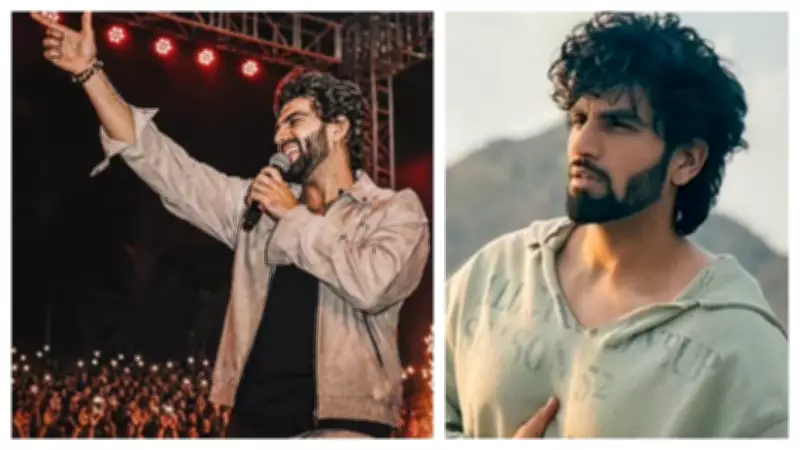
Music's Unchanging Core in a Digital World
Singer Laqshay Kapoor, despite being shaped by streaming platforms, social media, and algorithms, asserts that the essence of music has remained constant. For him, music's true power lies not in trends or technology but in its ability to forge deep human connections. "While attention spans may be shorter today, the fundamental purpose of music remains unchanged," says Kapoor. "At its core, music is about emotion. Great music has the ability to move beyond language, culture and even logic to connect directly with the human spirit."
According to Kapoor, music often helps people understand feelings that are otherwise difficult to articulate. "It allows us to experience emotions such as love, joy, longing or sadness. It often gives words and meaning to feelings we do not fully understand ourselves. As long as people feel, music will remain one of the most powerful ways to bring them together."
More Than Just Making Music
Kapoor acknowledges that building a music career today requires far more than talent alone. "My musical journey has unfolded during a time when artists are expected to wear multiple hats," he says. "Today, being a great musician alone is often not enough. Whether it's content creation, storytelling, marketing or performance, every aspect plays an important role in connecting with audiences and building a sustainable career."

While many artists rely on management teams, Kapoor believes musicians must understand the realities of the digital age. "The way audiences discover, engage with and support artists has changed. Ignoring that reality is not an option anymore." Yet, he remains committed to keeping music at the centre of everything he does. "At my core, I love music, and I see myself as a lifelong learner. Artistic authenticity comes from staying connected to that truth. Everything else is there to support the music, not replace it."
Tradition and Experimentation Can Coexist
In an era where musicians are often expected to choose between preserving tradition and embracing contemporary sounds, Kapoor sees no contradiction between the two. "I believe audiences ultimately guide musicians," he says. "If listeners want more music rooted in tradition, they will support it and help it find its place."
Reflecting on icons such as Nusrat Fateh Ali Khan and Mohammed Rafi, Kapoor says what inspires him most is their honesty towards their craft. "They made music they truly loved, and audiences connected with that authenticity." For him, the goal is not to chase trends or consciously preserve a genre. "My responsibility is to create honest music. If that draws from tradition, great. If it embraces new influences and global sounds, that's equally exciting. I don't see preserving roots and experimenting as opposing ideas."
Finding Himself on Stage
Despite building a successful audience online, Kapoor reveals that performing live did not come naturally to him. "For a long time, I was hesitant to perform live because of the rejections I faced growing up," he says. That changed the moment he stepped onto a stage after gaining recognition online. "I instantly felt at home and realised that performing live was where I connected most deeply with myself as an artist."
Today, that experience continues to guide his musical journey. "It reminded me that music is ultimately about human connection, and there's nothing more authentic than sharing a moment with an audience in real time."