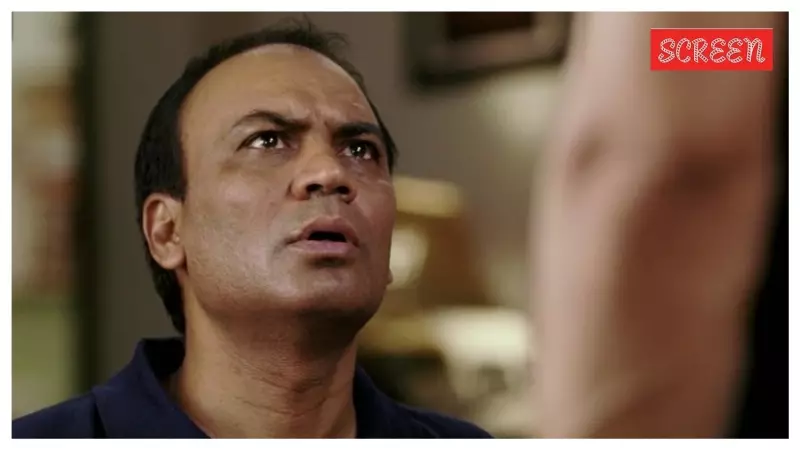
In a candid conversation, seasoned actor Vipin Sharma has sparked a debate by stating that there are no true method actors in the Indian film industry. He believes terms like 'method acting' are often thrown around casually and incorrectly to describe performances by stars like Aamir Khan and Ranveer Singh.
The Misconception of Method Acting in Bollywood
Vipin Sharma, best known for his role as the stern father in Aamir Khan's Taare Zameen Par, argues that while Indian actors are talented, the rigorous, time-consuming process of method acting is largely absent. "To be honest, there's not even a method actor in India. It's not possible," he stated during an interview for SCREEN Spotlight in December 2025.
He clarified that having a personal process for building a character does not equate to method acting. He cited Aamir Khan's approach for Lagaan, where the actor focused on standing evenly on both feet to symbolize finding ground and independence. "That's a beautiful thing. But that can't be called a method," Vipin explained.

Similarly, he addressed Ranveer Singh's deep immersion while playing Alauddin Khilji in Padmaavat. Vipin contrasted it with extreme Hollywood examples, like an actor playing an alcoholic who needed rehab afterward. He termed Ranveer's experience as "the impact of a character" rather than method acting, a sentiment echoed by Manoj Bajpayee's experience after filming Gali Guleiyan.
A Journey Back to Acting via Irrfan and Meisner
Vipin Sharma's own acting journey is marked by a significant hiatus. He quit acting a decade before his breakthrough, disillusioned and lacking confidence even after graduating from the National School of Drama (NSD). It was watching his batchmate Irrfan Khan's powerhouse performance in Maqbool (2003) that reignited his spark.
However, upon deciding to return, he faced a hard truth from friend Vineet Kumar, who pointed out he hadn't acted in over a decade. Instead of jumping back in, Vipin undertook serious retraining. He completed a rigorous 30-week course in the Meisner technique, an approach that emphasizes being present and truthful in the moment. This training, he says, eliminated his insecurities and directly prepared him for his iconic role in Taare Zameen Par (2007).
He highlighted a key difference between traditional Indian training and techniques like Meisner's. "Our history is Parsi theatre, folk forms, larger than life... So, most of our approach to characters is very external. We pick up mannerisms. There, it's more of soul-searching," he observed, noting that newer actors trained abroad are now bringing this internal focus to India.
Scene Partners, Slapstick, and Future Directing Plans
Recently, Vipin Sharma has been seen in prominent roles in major web series. In the same month, he played a politician in Maharani Season 4 and the Prime Minister's aide in The Family Man Season 3. He shared his experience working with the legendary Seema Biswas in the latter, praising her ability to transcend language barriers with raw emotion.
He also reminisced about his memorable scene in Anurag Kashyap's Gangs of Wasseypur, where Pankaj Tripathi's character chases him with a slipper. "At times, he actually hit me with the chappal... So, you can't call even that method acting? No no, it's the impact of the chappal," he joked.
Looking ahead, Vipin revealed he is venturing into direction. Following a period of professional frustration and advice from Sudhir Mishra, he worked on two scripts. He is now in talks with a producer for one project, where he plans to both act and direct. "Guess I'll find out [if it's tough]," he laughed, adding he would have someone on set to closely monitor his performance.
The actor fondly remembered his late friend Irrfan Khan, who still appears in his dreams, often bringing a sense of peace and their shared crazy humour. He also expressed a desire to do more comedy after a fun experience working with Kapil Sharma on Kis Kisko Pyaar Karoon 2, noting how the genre felt liberating.